
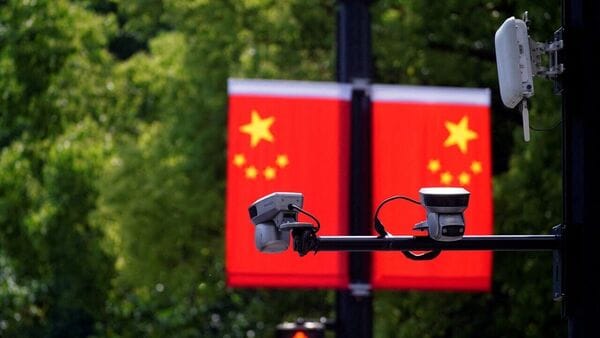
Indian government is set to bar Chinese video surveillance companies like Hikvision and Dahua from selling internet-connected CCTV cameras starting April 1, according to a report by The Economic Times. The report notes that the government is planning to explicitly refuse to certify products manufactured by these companies or those using Chinese chipsets.
Why is India banning Chinese CCTV cameras?
Reportedly, the ban comes after the Essential Requirements norms for CCTV cameras introduced by the Ministry of Electronics and Information Technology in April 2024. Under the rules, the government provided the industry with a two-year transition window to certify each product under the Standardisation Testing and Quality Certification regime at certified labs.
The rules state that manufacturers must explicitly declare the country of origin for critical components like the System-on-Chip. Devices must also be rigorously tested against vulnerabilities that could allow for unauthorised remote access.
As of now, only 507 CCTV camera models have successfully secured government certification.
Which brands are affected by the new rules?
Reportedly, the stringent certification process has forced major Chinese players to either drastically alter their supply chains or exit the Indian market entirely.
Dahua, which was once the second-largest player in this segment but has now been reduced to selling only analogue cameras.
Even popular smartphone makers like Xiaomi and Realme have reportedly completely exited the smart home camera segment after failing to secure certification.
Indian brands take the lead:
The report notes that the new rules have led to a complete shift in the industry landscape. While Chinese brands accounted for a third of all CCTV sales in India up until last year, domestic players now control over 80% of the market as of February 2026, as per Counterpoint data quoted by The Economic Times.
Indian brands like CP Plus, Qubo, Prama, Matrix, and Sparsh have all reportedly shifted their supply chains to rely heavily on Taiwanese chipsets and localised firmware.


