
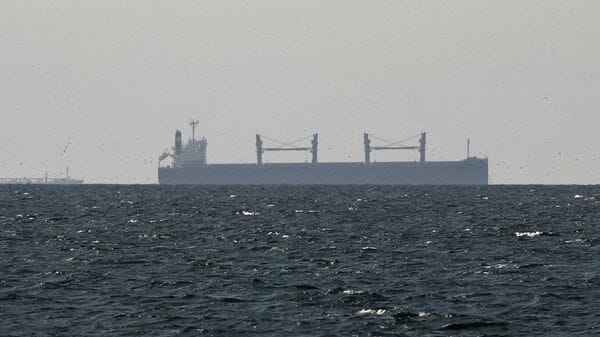
The Strait of Hormuz—a narrow but crucial sea route—has become the centre of the ongoing conflict involving Iran, the United States and Israel. Since the war began on February 28, traffic through this corridor has dropped sharply, triggering a global energy shock and raising serious concerns for international trade.
What is happening in the Strait of Hormuz?
The Strait of Hormuz connects the oil-rich Persian Gulf to the rest of the world. Around one-fifth of global energy supplies normally pass through it.
Before the conflict, more than 130 ships crossed daily. Now, only 3–4 ships per day are managing to pass. Many vessels are stranded nearby, and over 20 commercial ships have reportedly been attacked since the war began.
Iran has not fully shut the strait but has effectively imposed a selective blockade. It has restricted access for the US, Israel and their allies, while allowing ships from countries it considers “friendly” to pass. These include India, China, Russia, Iraq and Pakistan, according to Iranian Foreign Minister Abbas Araghchi.
What is the ‘toll system’ controversy?
Reports suggest Iran may be introducing a system where ships must seek approval and possibly pay fees to pass through the strait.
Some vessels are reportedly being asked to provide cargo and voyage details
Payments of up to $2 million have been mentioned in industry reports
Iran is considering a law to formalise such charges
However, Iran has officially denied collecting such fees.
The Islamic Revolutionary Guard Corps (IRGC) is believed to be controlling ship movements and directing vessels through specific routes near Iranian waters.
US hits back
US Secretary of State Marco Rubio called the move dangerous: “Not only is this illegal, it’s unacceptable… it’s important that the world have a plan to confront it.”
Washington is urging allies to help secure the strait, signalling potential escalation if disruptions continue.
Why is this a big deal for the world?
The disruption has caused a major global impact:
-Oil production in the Gulf has been reduced
-Some refineries have been damaged in the conflict
-Oil prices have surged, with Brent crude crossing $114 per barrel
Is Iran allowed to charge fees?
Under international law, especially the United Nations Convention on the Law of the Sea (UNCLOS), the Strait of Hormuz is an international waterway.
This means:
-Ships from all countries have the right to pass through
-Coastal nations like Iran cannot block or restrict movement
-Charging fees is generally seen as illegal because it interferes with free passage


