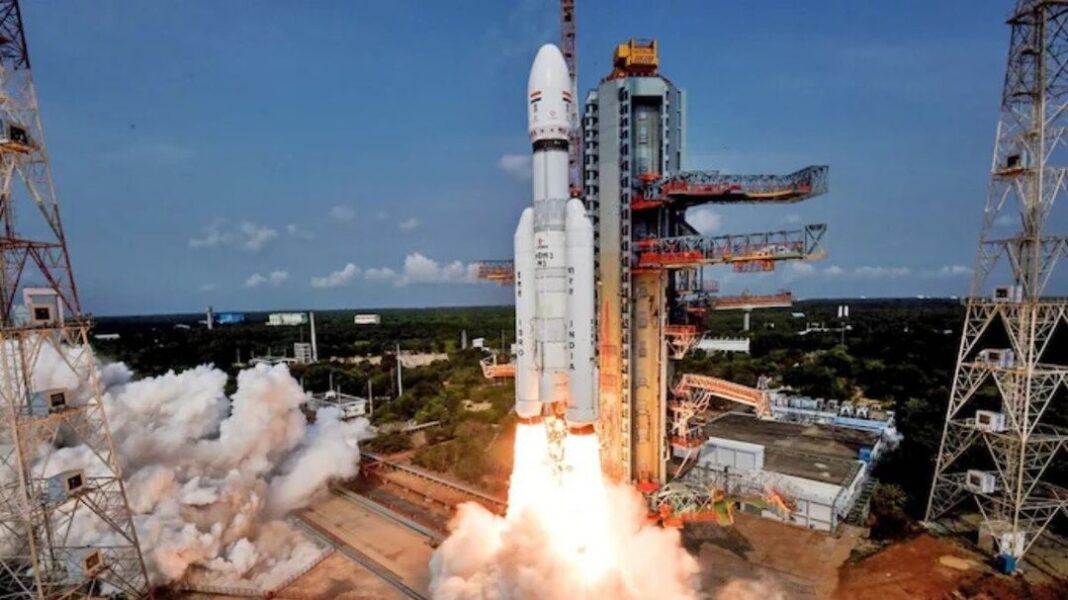
India has a plan to put an astronaut from the country on the Moon by 2040. Getting there requires everything to go right between now and then.
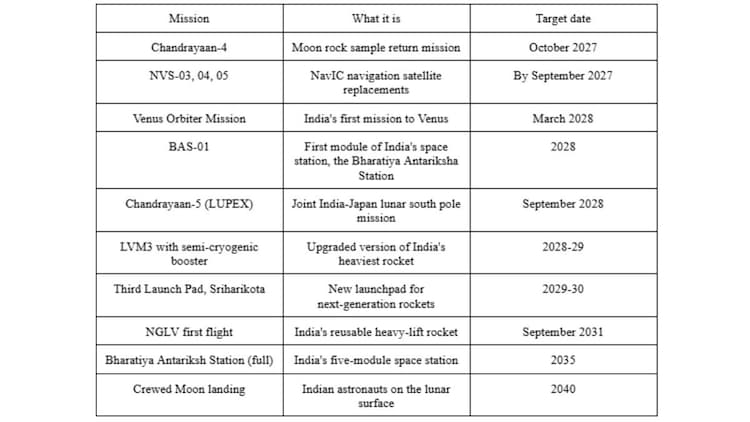
A timeline compiled from multiple official sources, including presentations at the International Astronautical Congress, the Global Space Exploration Conference, and the Rajya Sabha Standing Committee report on the Department of Space tabled in March 2026, shows revised target dates for nearly every major mission on the Indian Space Research Organisation (Isro)’s roadmap.
Some have slipped. Others have been pulled forward. Taken together, they sketch the most detailed picture yet of what India’s space programme looks like between now and 2047.
IS ISRO’S REUSABLE ROCKET AHEAD OF SCHEDULE?
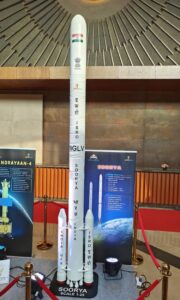
The most significant shift in the updated timeline involves the Next Generation Launch Vehicle, or NGLV.
This is a three-stage, partially reusable rocket designed to carry up to 30 tonnes to low-Earth orbit, which is nearly three times the capacity of India’s current most powerful rocket, the Launch Vehicle Mark 3 (LVM3).
Reusability means the first stage, after separating from the upper rocket, will fire its engines to slow itself down and land back vertically, much like SpaceX’s Falcon 9 boosters do. This dramatically reduces the cost of each launch.
Cabinet approved the NGLV project in September 2024, with a budget of Rs 8,240 crore and a development window of 96 months.
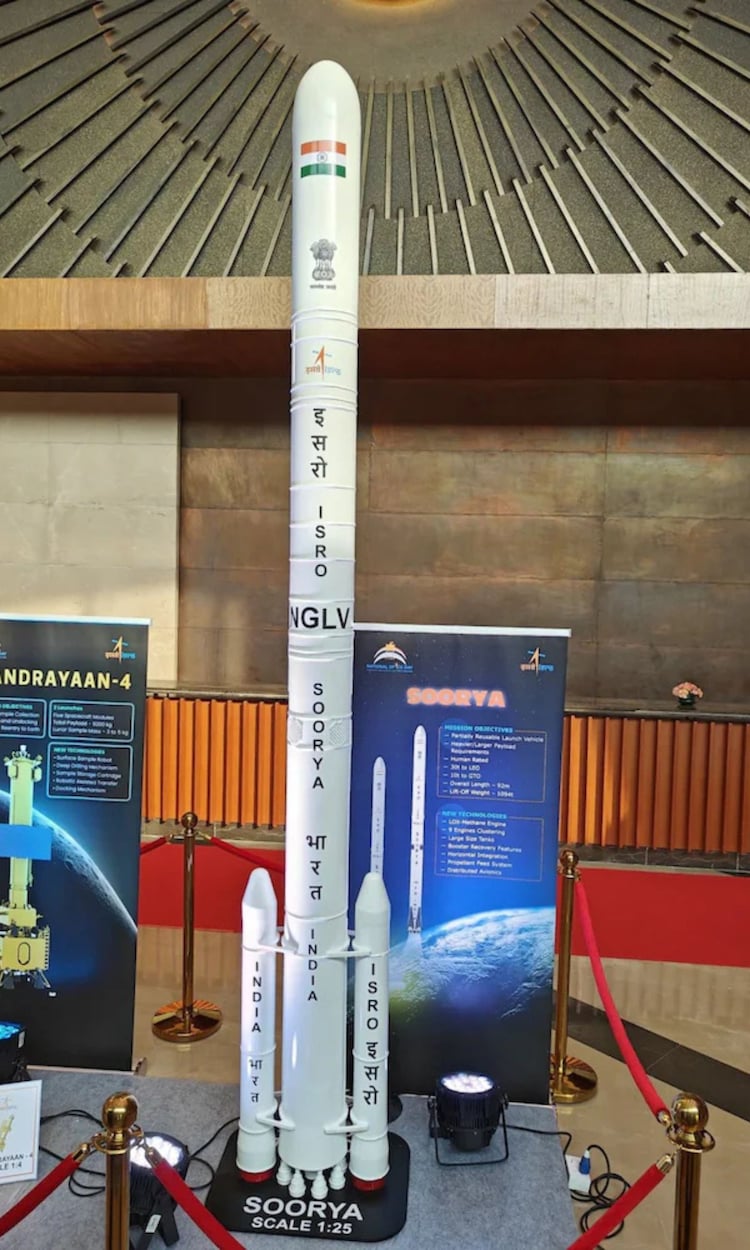
The first developmental flight is now targeted for September 2031, which is a year ahead of the December 2032 completion window that had been previously indicated.
For a programme this complex, pulling a target forward by a year is not a small thing.
The NGLV uses a LOX-Methane propulsion system, meaning it burns liquid oxygen and liquid methane in its first and second stages. The third stage uses a proven cryogenic engine running on liquid oxygen and liquid hydrogen, an uprated version of the engine currently used on the LVM3.
WHEN WILL CHANDRAYAAN-4 BRING MOON ROCKS BACK TO EARTH?
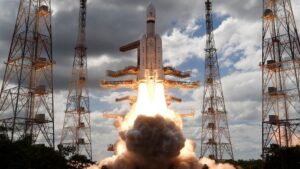
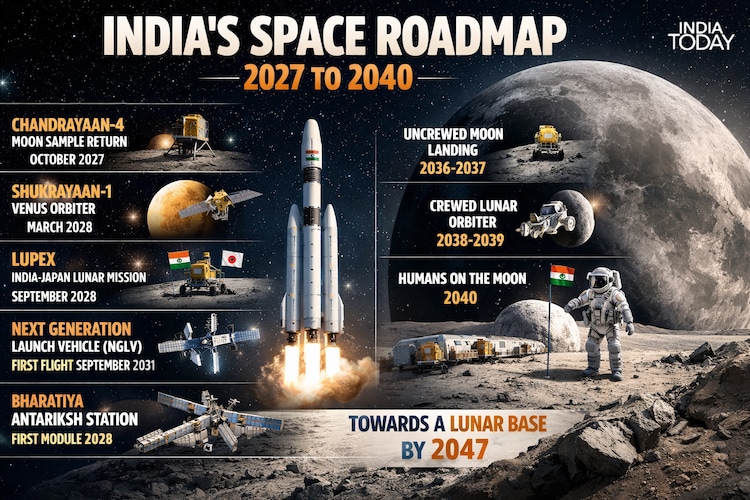
The revised timeline holds firm on Chandrayaan-4 for October 2027. This will be Isro’s most complex mission to date.
Two LVM3 rockets will carry five spacecraft modules into orbit separately: an Ascender Module, a Descender Module, a Re-entry Module, a Transfer Module and a Propulsion Module.
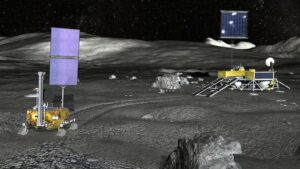
The two stacks will dock in Earth orbit, fly to the Moon’s south polar region together, land on the surface, collect up to 3 kg of lunar regolith, which is loose surface soil, seal it inside a vacuum container, and bring it back to Earth.
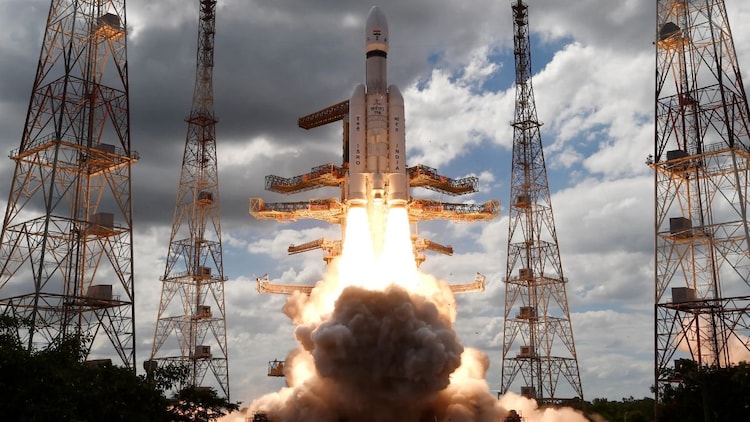
No country has ever returned samples from the lunar south pole. If it succeeds, India would join the United States, the Soviet Union and China as the only nations to have brought Moon rocks home.
The Rajya Sabha committee noted that spending on Chandrayaan-4 has been slow.
Of Rs 150 crore allocated for 2025-26, only Rs 34.60 crore had been spent by January 2026, partly because procurement of certain components was delayed after a change in the launch vehicle configuration to include a semi-cryogenic engine.
WHAT IS INDIA PLANNING FOR VENUS?
India’s Venus Orbiter Mission or Shukrayaan-1, approved in September 2024 at a project cost of Rs 824 crore, is targeted for launch in March 2028. The spacecraft configuration has already been finalised.
It will orbit Venus and study the structure and composition of the planet’s atmosphere, the chemistry of its cloud layers, the mechanism behind its super-rotation, where the entire atmosphere completes one rotation faster than the morning star’s surface does, and the way the solar wind interacts with Earth’s twin.
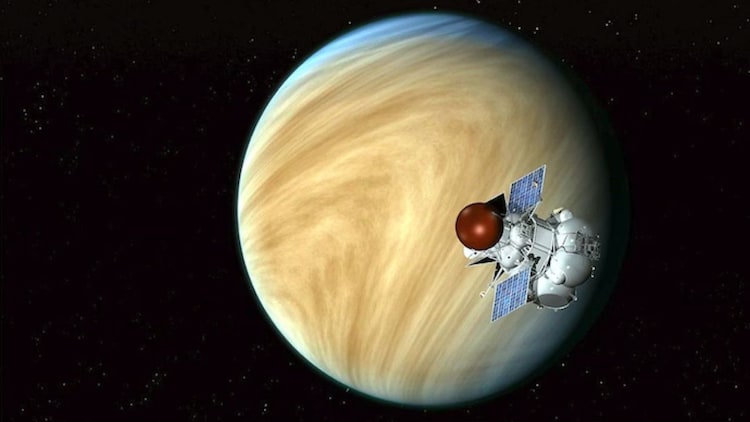
It will also map the Venusian surface at a higher resolution than most previous missions and attempt to characterise subsurface features including possible volcanic hotspots.
Most earlier Venus missions covered only narrow strips of the planet. India’s orbiter is designed for more uniform coverage, which could produce datasets that no existing mission has generated.
WHAT IS CHANDRAYAAN-5, AND WHY IS JAPAN INVOLVED?
Chandrayaan-5, also known as LUPEX or the Lunar Polar Exploration mission, is a joint project between Isro and JAXA, the Japan Aerospace Exploration Agency.
Isro will provide the lander, JAXA is building the rover and also providing the H3 rocket for the launch, at Japan’s cost. The target date is September 2028.
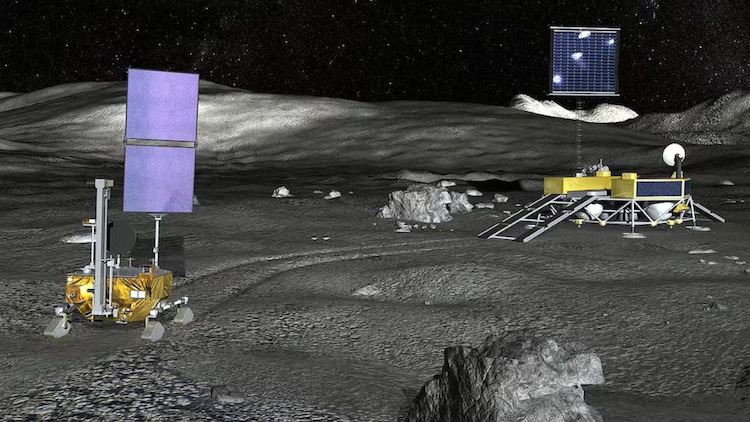
The rover will drill into the surface at the lunar south pole to measure water ice, determining how much of it exists, how deep it goes and what physical form it takes.
This matters for future crewed missions because water ice can theoretically be split into hydrogen and oxygen, which are both rocket propellants, and also used to make drinking water.
WHAT IS THE BHARATIYA ANTARIKSH STATION?
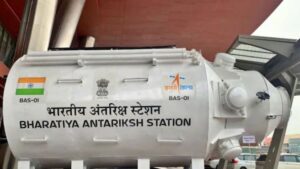
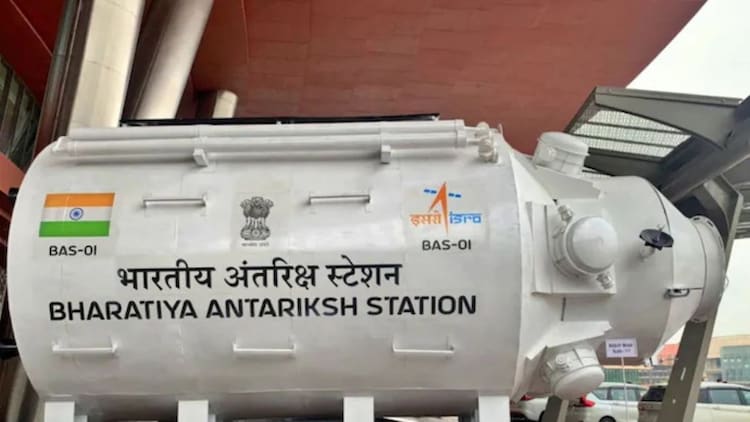
The Bharatiya Antariksh Station (BAS) is India’s planned modular space station in low-Earth orbit, at an altitude of roughly 400 km above Earth.
It will have five modules and is designed for human habitation, scientific research and microgravity experiments.
The first module, BAS-01, is targeted for launch in 2028. A fully operational five-module station is expected by 2035.
Its development is funded from within the expanded Gaganyaan programme budget of Rs 20,193 crore.
Beyond 2035, the roadmap extends to an uncrewed Moon landing by 2036 or 2037, a crewed lunar orbiter by 2038 or 2039, a crewed Moon landing in 2040, a permanent lunar outpost called Bharatiya Chandra Nivas by 2047, and eventually a permanent lunar base called Bharatiya Chandra Dvar somewhere between 2040 and 2047.
These are targets, not guarantees. The Rajya Sabha committee has flagged persistent concerns about slow fund utilisation across several missions.
But the roadmap exists, the budgets have been approved, and for the first time, India has a publicly traceable sequence of missions stretching all the way to the Moon.