India’s private space revolution has a new name, and it comes from an unexpected address. Bharath Space Vehicle (BSV), a startup incorporated in 2024 and headquartered in Surat, Gujarat, is building what could be one of the country’s most credible private rocket programmes.
The founding team brings combined 70-plus years of experience inside the Indian Space Research Organisation (Isro).
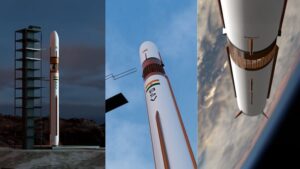
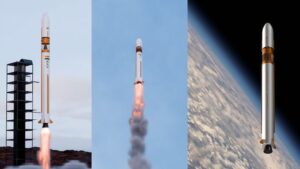
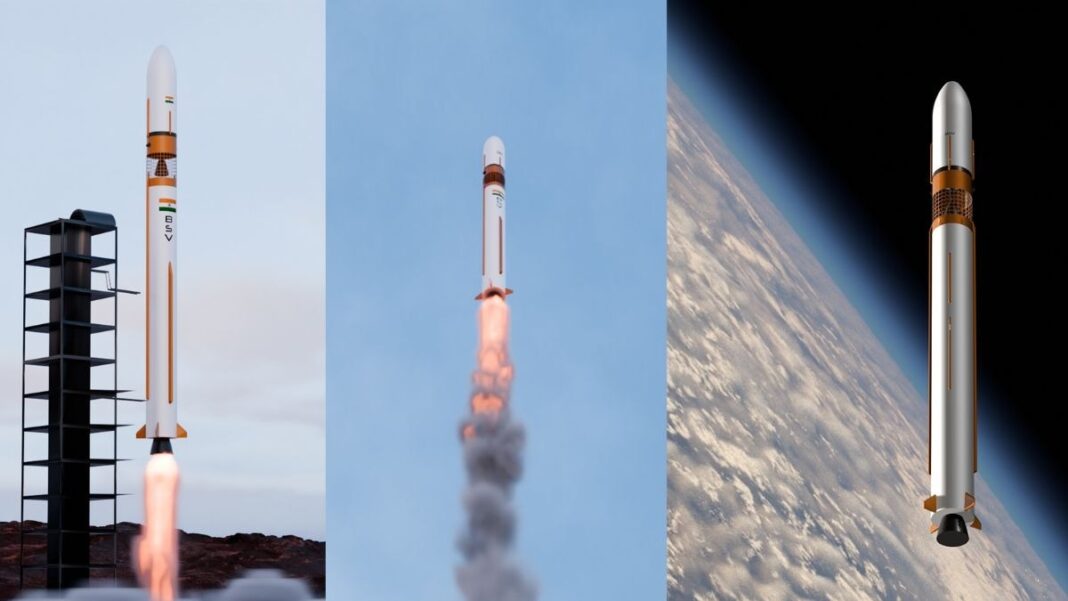
BSV is developing Agasthya-1, a two-stage expendable rocket powered by two LOX/RP-1, or liquid oxygen and kerosene engines, designed to provide reliable and affordable access to space.
Standing 28 metres tall, the small-lift vehicle targets the small-satellite market, capable of delivering 500 kg to a Sun-Synchronous Polar Orbit (SSPO) and 800 kg to a low-inclination low-Earth orbit (LEO) at roughly 400 km altitude.
WHY DOES LIQUID FUEL MAKE AGASTHYA-1 DIFFERENT?
Most Indian small-satellite rockets, including Isro’s own SSLV (Small Satellite Launch Vehicle), run on solid propellants.
BSV has chosen a liquid bipropellant engine, LOX and RP-1, for a straightforward reason: you can fully test it before launch.
With solid motors, you light the candle on launch day and hope for the best.
With liquid engines, BSV’s fly-what-you-test philosophy allows the second-stage engine to undergo a 10-to-40-second hot-fire acceptance test, while the first-stage engine gets a 3-to-4-second pre-launch hot-fire check.
Stage separation and fairing jettison, or the act of dropping the protective nose cone of a rocket, can also be validated on the ground, reducing the chance of inflight failure considerably.
This also enables launch readiness within 24 hours of notice, a growing requirement for defence and disaster-response satellite operators.
WHO IS BEHIND AGASTHYA-1?
The founding team includes Dr N. Vedachalam, former Director of Isro’s Liquid Propulsion Systems Centre (LPSC), who led development of the cryogenic upper stage for the Geosynchronous Launch Vehicle (GSLV), including the successful testing of India’s first cryogenic engine for 1,000 seconds.
A Padma Shri awardee, he continues to consult for Isro, DRDO, and the Ministry of Defence.
Co-founder and CTO S.V. Sharma is a structural engineering veteran from the Vikram Sarabhai Space Centre (VSSC), who earned his M.Tech from IIT Kanpur in 1972 and worked directly under Dr A.P.J. Abdul Kalam on the SLV-3 (Satellite Launch Vehicle 3)
He contributed to the ASLV (Augmented Satellite Launch Vehicle), PSLV (Polar Satellite Launch Vehicle), GSLV, and GSLV Mk-III programmes.
Bhavin Patel, the COO and CFO, is an aerospace engineer from IIT Kanpur.
COULD GUJARAT BECOME INDIA’S THIRD SPACEPORT?
BSV has proposed a launch complex near Kodinar in Gujarat’s Gir Somnath district.
Gujarat’s Science and Technology Minister Arjun Modhwadia told the state assembly that IN-SPACe has identified a suitable location between Diu and Kodinar for a satellite launch facility, comparable to Sriharikota.
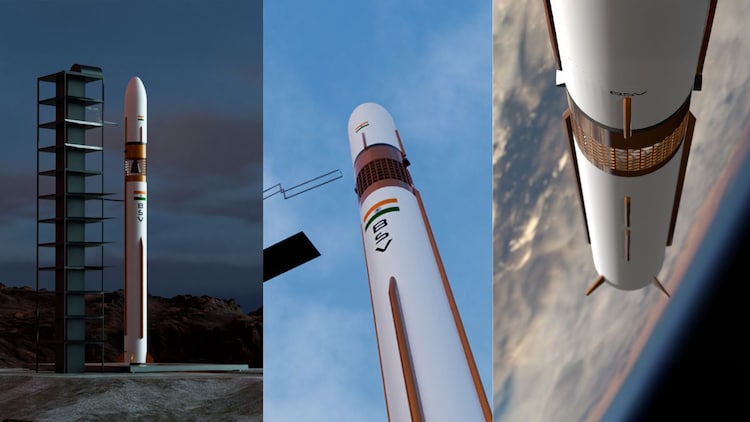
The coastal location offers open sea access and favourable launch corridors for specialised satellite trajectories.
Isro had earlier evaluated a Gujarat site for its SSLV launch complex before Kulasekarapattinam in Tamil Nadu was selected.
If Kodinar moves forward, India would have its first west-coast orbital launch option, reducing dependence on a single spaceport.
WHAT DOES THIS MEAN FOR INDIA’S SPACE PUSH?
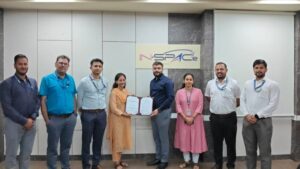
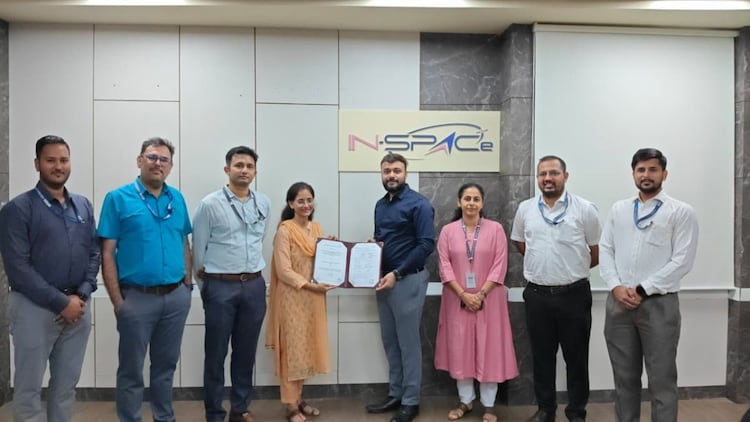
BSV has signed a framework MoU with IN-SPACe and Isro, securing access to national testing facilities, technical expertise, and launch infrastructure.
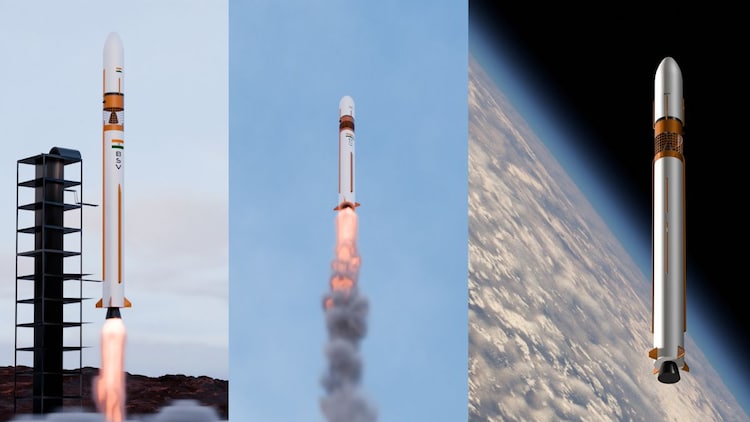
India’s New Space Policy of 2023 opened the launch vehicle market to private players, and BSV joins Skyroot Aerospace and Agnikul Cosmos in betting on frequent, affordable launches for small satellites.
A startup from Surat, built by the engineers who gave India the GSLV, now wants to add a new chapter to that story.