
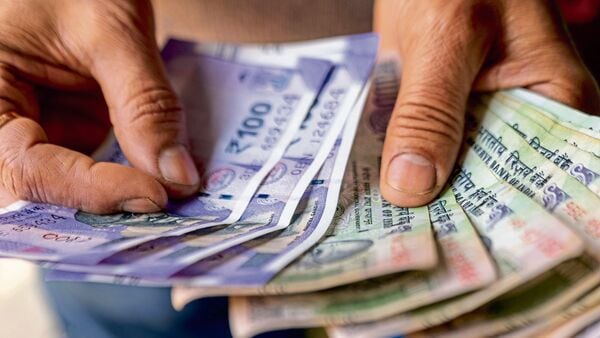
Changes from April 1 2026 LIVE: From 1 April 2026, several key financial changes in India are set to come into place. These include changes in income tax and ITR filing norms, PAN application changes, revisions in LPG price, changes in railway ticket booking system and many more.
Several confirmed financial and regulatory changes will come into force across banking, fuel, taxation and travel. These changes will have a direct impact on the day-to-day lives of individual citizens.
One of the biggest changes will be the implementation of the new Income Tax Act, 2025, which will replace the decades-old Income Tax Act, 1961. Under this, several reforms have been announced and the document has been simplified.
The new act will simplify the terminology and replace the slightly confusing ‘Assessment Year’ (AY) and ‘Previous Year’ (PY) with a single ‘Tax Year’.
Another significant change will be the tightening of PAN rules.
The Indian Railways will now permit zero refund if tickets are cancelled within 8 hours of departure. Earlier, this timeline was 4 hours.
Follow for April 1 2026 financial changes LIVE updates on Mint.
Changes from April 1 2026 LIVE: HRA exemption, children’s education expenses
HRA exemption: Four new cities added to list of metros allowed to claim 50% House and Rental Allowance (HRA) exemption. Ahmedabad, Bengaluru, Hyderabad and Pune have been added to the list which includes Chennai, Delhi, Kolkata and Mumbai. This is under the Old Tax regime.
Children’s education-related expenses: The exemption for the children’s education allowance has increased from ₹100/month to ₹3,000/month, per child under Old Tax regime. Further, the hostel expenditure allowance under Old Tax regime has also been increased from ₹300/month to ₹9,000/month, per child.
Changes from April 1 2026 LIVE: Corporate loans, vehicles
- Corporate loans: Loans with no interest or interest rates below the market rate are to be taxed, based on the difference between the State Bank of India (SBI) lending rate and the actual rate charged, subject to certain exceptions. However, loans less than ₹2 lakh and those taken for medical emergencies remain tax-free.
- Corporate / company vehicle: For vehicles assigned by employer for work and personal use, tax of ₹8,000/month will be applicable on cars with engines up to 1.6 litre; and ₹10,000/month for bigger vehicles. This is under the Old and New Tax regimes.
Changes from April 1 2026 LIVE: Meal card, coupons and gift cards
- Meal cards: No taxes for corporate meal cards that cost ₹200 or less per meal, under the Old Tax regime only. This includes free food and non-alcoholic beverages for employees, and is an increase from the previous ₹50 per meal
- Coupons and gift cards: Corporate gift cards, gift certificates or coupons of up to ₹15,000 each year are tax-free under the Old Tax regime.
Changes from April 1 2026 LIVE: What are the structural changes to I-T rules?
- The number of tax rules has been reduced from 399 to 190.
- The number of tax forms has been reduced from 511 to 333.
- The changes aim to make the taxation system easier for businesses and taxpayers to use.
- Further, all the forms will look the same and feature text that is easier to read, with features like auto-filled data.
Changes from April 1 2026 LIVE: What are the current income tax slabs under new tax regime?
The current income tax slabs under new tax regime are:
- Income up to ₹4 lakh: Tax rate 0%
- Income up to ₹8 lakh: Tax rate 5%
- Income up to ₹12 lakh: Tax rate 10%
- Income up to ₹16 lakh: Tax rate 15%
- Income up to ₹20 lakh: Tax rate 20%
- Income up to ₹24 lakh: Tax rate 25%
- Income above ₹24 lakh: Tax rate 30%
Changes from April 1 2026 LIVE: What are the current income tax slabs under old tax regime?
- Income up to ₹2.5 lakh: Tax rate 0%
- Income up to ₹5 lakh: Tax rate 5%
- Income up to ₹10 lakh: Tax rate 20%
- Income above ₹10 lakh: Tax rate 30%
Changes from April 1 2026 LIVE: Key FAQs answered on Form 130 answered
From 1 April 2026, Form 130 will become the new standard for TDS reporting and submission for salaries and certain pension incomes. It aims to make tax filing easier and standardised. Here are key FAQs taxpayers should know.
Changes from April 1 2026 LIVE: What changes for taxpayers?
- Tax filing will now become more structured, detailed and easier.
- Greater emphasis will now be put on system-generated data.
- The aim is to reduce mismatches between ITRs and employer filings.
- The form will aim to simplify the tax submission process.
Changes from April 1 2026 LIVE: Can a duplicate Form 130 be issued?
Yes. If the original document is lost, a duplicate can be issued, clearly marked as such.
Changes from April 1 2026 LIVE: Can you receive multiple Form 130s?
Yes. If you changed jobs during the year: Each organisation/ employer will issue you a separate Form 130 (Part A & B).
Part C may be issued by each employer or just the last employer.
Changes from April 1 2026 LIVE: Do you need to attach Form 130 to your ITR?
No. You must keep this document for records and verification. Still, you are not required to submit it with your ITR return.
Changes from April 1 2026 LIVE: Can errors in Form 130 be corrected?
Yes, errors can be rectified. In case there is a mistake or omission:
- The employer must file a revised TDS statement.
- A corrected Form 130 can then be downloaded later and reissued.
Changes from April 1 2026 LIVE: What is the due date for issuing Form 130?
Form 130 must be issued by 15 June of the financial year, following the year in which income was paid and tax deducted.
Changes from April 1 2026 LIVE: Can Form 130 be issued without filing TDS returns?
No. The employer must first file quarterly TDS statements (Form 138). Only after processing these statements can Form 130 be generated.
Changes from April 1 2026 LIVE: How will Form 130 be issued?
- Form 130 will be a system-generated document
- Must be downloaded from the TRACES portal
- Can be issued with either a digital or manual signature
- Cannot be created manually outside the system
Changes from April 1 2026 LIVE: Who will issue Form 130?
- Employers will issue Form 130 to salaried individuals
- Specified banks will issue it to eligible senior citizens
- Issuance of this certificate is mandatory once TDS has been deducted and deposited.
Changes from April 1 2026 LIVE: All you need to know about Form 130
Form 130 is divided into three parts:
- Part A: Details of the employer or bank and the employee/senior citizen
- Part B: Summary of income paid, TDS deducted and other key tax details
- Part C: Complete computation of taxable income for the financial year
Part C further includes:
- Annexure I: For salaried employees (salary, exemptions, deductions, tax, etc.)
- Annexure II: For specified senior citizens (pension and interest income details)
Changes from April 1 2026 LIVE: What replaces Form 16?
As per the updated Income-Tax Rules, 2026, Form 130 will officially replace Form 16. This means salaried taxpayers will receive Form 130 instead of Form 16 from FY 2026–27 onwards.
Changes from April 1 2026 LIVE: What is Form 130?
Form 130 is a Tax Deducted at Source (TDS) certificate issued annually by employers or specified banks. This document also applies to specified senior citizens who earn interest income and receive pensions. The main objectives of this document are:
- To establish proof that the tax has been deducted and deposited with the government.
- To provide a clear summary of salary details, deductions and tax liabilities, if any.
- To help individuals claim TDS credit while filing their income tax returns (ITR).
Changes from April 1 2026 LIVE: Why is a PAN card important?
A PAN card is an important identification document issued by the Income Tax Department to all taxpayers in India. It is a 10-digit alpha numeric number that records all tax-related information for individuals and entities.
The PAN card acts as a key document for making financial transactions, making it a mandat
Changes from April 1 2026 LIVE: What documents will you need?
Starting April 1, 2026, applicants seeking a PAN card will be required to submit additional supporting documents along with their application. You will need any the following documents:
- Birth certificate,
- Voter ID,
- Passport,
- Driving license,
- Matriculation certificate,
- Affidavit issued by a magistrate, or
- Other government-issued documents.
Authorities have urged citizens to complete PAN-related formalities before the deadline to avoid additional burden of providing multiple documentation and making the process easier for them.
Changes from April 1 2026 LIVE: New PAN forms coming
New PAN application forms are expected to be introduced soon as part of the updated process, replacing the existing ones. From April 1, 2026, the current (old) PAN forms will no longer be accepted for fresh applications or updates.
Changes from April 1 2026 LIVE: PAN name to match Aadhaar
Starting April 1, 2026, name on the card will be removed. PAN name will be as per Aadhaar only. Hence, applicants must ensure that their Aadhaar details are correct.
Changes from April 1 2026 LIVE: Additional documents required
Until March 31, 2026, PAN applications could be made using only Aadhar. From April 1, 2026, applicants will need to submit extra documents, making this the last chance to apply through the simplified Aadhaar-based process.
Changes from April 1 2026 LIVE: 5 reliefs for taxpayers
Budget 2026 eases compliance requirements, rationalises TCS and offers relief on motor accident compensation thus benefitting middle class and salaried taxpayers as a whole. Here are the top 5 relief for Indian taxpayers with effect from 1 April 2026.
Changes from April 1 2026 LIVE: No interest on I-T penalty during appeal
Budget 2026 relaxes compliance norms for taxpayers, noting that there will be no interest liability on the penalty amount during the appeal period before the first appellate authority, irrespective of the outcome.
Changes from April 1 2026 LIVE: Interest on motor accident compensation is made tax-free
Finance Minister Nirmala Sitharaman, during her Budget speech, proposed a tax exemption on awards given by the Motor Accident Claims Tribunal, with effect from 1 April.
“In order to alleviate the sufferings of victims of such an accident and their family, which may cause extreme hardship to the aggrieved person and family, it is proposed to amend the said Schedule to provide exemption to an individual or his legal heir, on any income in the nature of interest under the Motor Vehicles Act, 1988,” the Budget document reads.
Changes from April 1 2026 LIVE: TCS rationalised on education and healthcare
- Budget 2026 also reduced the TCS rate for pursuing education and for medical purposes under the Liberalised Remittance Scheme (LRS).
- Under the new rule, the TCS rate for such purposes has been reduced from the current 5% to 2%. However, the ₹10 lakh threshold still remains.
- For remittances under LRS for other purposes, including investments, overseas spending and more, the TCS rate remains 20% on amounts above ₹10 lakh.
Changes from April 1 2026 LIVE: Overseas travel costs less
The Budget has reduced the Tax Collected at Source (TCS) rate on the sale of overseas tour programme packages. The TCS rate on overseas tour packages has been reduced from the current 5% and 20% to 2%. The TCS rate cut has been done without any stipulation of the amount.
As a result, overseas travel through tour packages will reduce upfront costs and simplify travel for tourists.
Changes from April 1 2026 LIVE: Revised ITR filing deadline extended
Budget 2026 provides for taxpayers to file their revised ITRs beyond 31 December.
- Under Section 263(5) of the Income-tax Act, 2025, taxpayers can file revised returns to correct omissions or mistakes in the original ITRs. This deadline was previously limited to 31 December of the relevant assessment year.
- From 1 April, taxpayers will be able to file their revised returns till 31 March. However, they will have to pay a nominal fee if they miss the 31 December deadline.
Changes from April 1 2026 LIVE: 10 key financial changes
Financial and regulatory changes in April 2026 include new tax rules, higher rebates, updated TDS forms, increased banking charges, changes in fuel prices and new travel refund rules. Here are 10 financial changes to look out for.
Notably, while most changes, especially tax reforms, changes to Form 16, and banking charges, have been officially confirmed; some others await final government clearance.
Changes from April 1 2026 LIVE: Revised train ticket refund structure
The following is the revised refund structure for train ticket cancellations:
- If cancelled between 8 and 24 hours before departure, → 50% refund.
- If cancelled between 24 and 72 hours, → 25% deduction.
- If cancelled more than 72 hours before departure, → maximum cancellation charge applies, not a full refund.
- The refund in such cases depends on Indian Railways’ terms and conditions, which are subject to change.
Changes from April 1 2026 LIVE: Stricter train ticket cancellation rules
From 1 April, the Indian Railways will now permit zero refund if tickets are cancelled within 8 hours of departure. Earlier, this timeline was 4 hours.
Changes from April 1 2026 LIVE: Lower daily withdrawal limits
Punjab National Bank has decided to reduce the debit card withdrawal limit to ₹50,000 to 75,000 for select cards from 1 April. Several cards that earlier had withdrawals of up to ₹100,000 will now have reduced limits.
Changes from April 1 2026 LIVE: ATM withdrawal charges increase
- From 1 April, lenders such as HDFC Bank will include UPI ATM withdrawals in the free limit. If you exceed five transactions, you will be charged ₹23 per transaction thereafter.
- Similarly, Bandhan Bank will provide customers with three free transactions in metro cities and five in non-metro cities. ₹23 will be charged for additional transactions and ₹25 for any failed transactions due to insufficient balance.
Changes from April 1 2026 LIVE: CNG, PNG & ATF price changes likely
Fuel costs, including PNG, CNG and aviation turbine fuel, will likely be revised, thus impacting airfares and day-to-day transportation within the nation. These price changes, if implemented, will affect citizens’ lives comprehensively.
Changes from April 1 2026 LIVE: LPG prices to be revised
Domestic LPG cylinder prices might be revised on 1 April. These charges might be revised to address the geopolitical challenges due to the ongoing US-Israel war with Iran.
Changes from April 1 2026 LIVE: PAN Card rules to be tightened
- The Income Tax Department will no longer restrict Aadhaar as only eligible proof of date of birth for PAN card applications.
- From 1 April, documents such as the Class X certificate and passport will now be mandatory.
Changes from April 1 2026 LIVE: Different TDS forms?
- From 1 April 2026, Form 16 and Form 16A will be replaced by Form 130 and Form 131, respectively.
- The issuance timelines will be amended to facilitate smoother compliance and provide clarity in tax filings.
Changes from April 1 2026 LIVE: Higher tax rebate benefit
Under the new tax regime from 1 April, individuals earning up to ₹12 lakh annually will pay zero tax. This is due to an increased rebate under Section 87A.
Changes from April 1 2026 LIVE: New Income Tax Law
The Income Tax Act 2025 will come into effect from 1 April, replacing the Income Tax Act 1961.
- The new act will simplify the terminology and replace the slightly confusing ‘Assessment Year’ (AY) and ‘Previous Year’ (PY) with a single ‘Tax Year’.
- Along with this, there are a host of changes that will make the code more meaningful.
Changes from April 1 2026 LIVE: What are the renamed tax forms?
New tax forms are effective from 1 April as follows:
- Form 16 is now Form 130
- Form 16A is now Form 131
- Form 12BB is now Form 124
- Form 26AS is now Form 168
Changes from April 1 2026 LIVE: LPG price revision
The government may revise LPG cylinder prices from 1 April amid the US-Iran war.
Changes from April 1 2026 LIVE: NHAI to hike FASTag annual pass charges
NHAI said it is adjusting the applicable charge for the FASTag Annual Pass from the existing ₹3,000 to ₹3,075 for the Financial Year 2026–27. Commencing April 1, the modification in the price has been implemented in line with the stipulations of the National Highways Fee (Determination of Rates and Collection) Rules, 2008, NHAI stated.
Changes from April 1 2026 LIVE: Govt making efforts to facilitate youth in aviation sector
“India’s aviation sector is growing rapidly. As new airports are built across India, the demand for new aircraft is also increasing. Consequently, various airlines have placed orders for hundreds of new aircraft. These new facilities and planes will require a large workforce to fly, service, and maintain them. This presents a massive opportunity for our youth. To support this, our government is also expanding training facilities across the aviation sector,” says PM Modi.
Changes from April 1 2026 LIVE: New tax forms coming next month
- Form 16 is now Form 130
- Form 16A is now Form 131
- Form 12BB is now Form 124
- Form 26AS is now Form 168
All the forms will be applicable with effect from 1 April.
Changes from April 1 2026 LIVE: TDS changes to come into effect
From 1 April 2026, Form 16 and Form 16A will be replaced by Form 130 and Form 131, respectively. The issuance timelines will be amended to facilitate smoother compliance and provide clarity in tax filings.
Changes from April 1 2026 LIVE: SGB taxes to come into effect
Budget 2026 imposed capital gain taxes on Sovereign Gold Bonds (SGBs) that have not been directly bought from the Reserve Bank of India (RBI), after years of the tool being celebrated as a tax-free investment. These taxes take effect on 1 April.
Changes from April 1 2026 LIVE: STT hike to come into effect
In her Budget speech for 2026-27, Nirmala Sitharaman said the STT on futures contracts will be raised to 0.05% from 0.02%. “STT on options premium and exercise of options are both proposed to be raised to 0.15 per cent from the present rate of 0.1% and 0.125%, respectively,” she said.
These changes will come into effect from 1 April.
Changes from April 1 2026 LIVE: PAN norms to change next week
Starting April 1, 2026, name on the PAN card will be removed. PAN name will be as per Aadhaar only. Hence, applicants must ensure that their Aadhaar details are correct.
About the Authors
Swastika is a Digital Content Producer at LiveMint, covering business news and business trends. She has always been intrigued by the numbers that driv…Read More
Jocelyn Fernandes is a journalist and editor with nearly 13 years of experience covering the business, corporate, economy and markets beats in news.<b…Read More
Get Latest real-time updates


