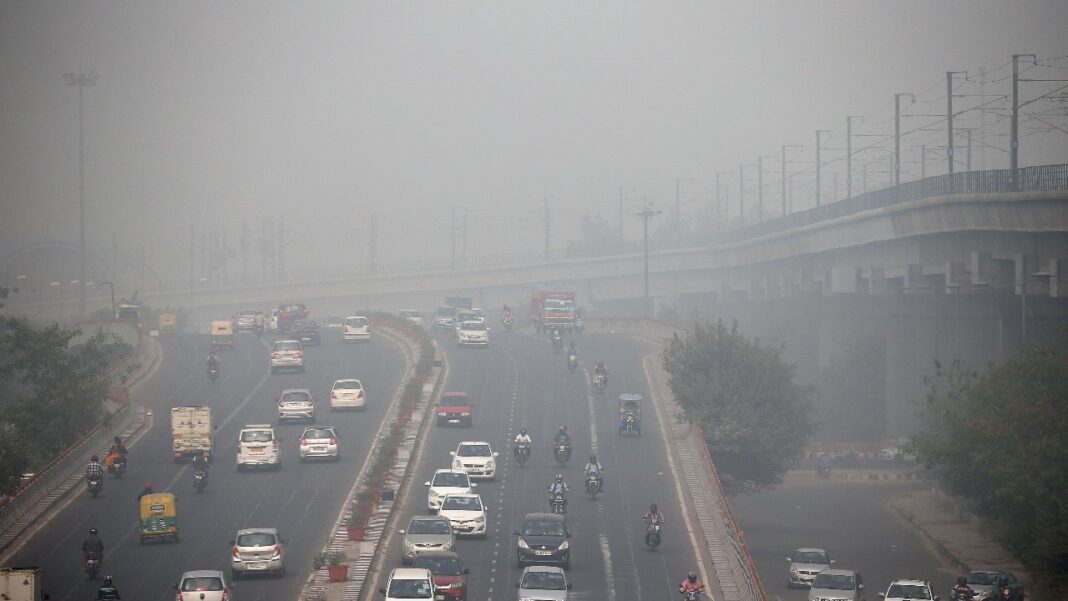
Delhi has a pollution problem that no amount of odd-even schemes or firecracker bans has been able to fully fix. The city recorded zero “good” air quality days in all of 2025, according to data tracked by AQI.in, a real-time air quality monitoring platform.
Now, the Delhi government is betting on a rather extraordinary idea: what if the city’s roads, buildings, and pavements could literally digest the smog floating above them?
On March 13, 2026, the Delhi Government signed a Memorandum of Understanding with the Indian Institute of Technology Madras (IIT Madras) to launch a six-month pilot study on photocatalytic surfaces, specifically using titanium dioxide (TiO2). These are smart materials which use light to trigger chemical reactions, destroying pollutants and bacteria.
When exposed to sunlight, the material chemically breaks down nitrogen dioxide (NO2) and volatile organic compounds (VOCs) into far less harmful substances. VOCs are carbon-based chemicals that easily turn into gases or vapours at room temperature.

WHAT IS PHOTOCATALYSIS, AND HOW DOES IT WORK?
Think of TiO2 as a molecular bouncer. When ultraviolet light from sunlight hits it, it generates reactive oxygen species, including hydroxyl radicals and superoxide radicals.
These highly reactive molecules then latch on to nearby pollutants like NO2 and VOCs, oxidising them and converting them into harmless compounds like nitrates and water. The process is entirely passive; no energy input required, no running costs, no switches to flip.
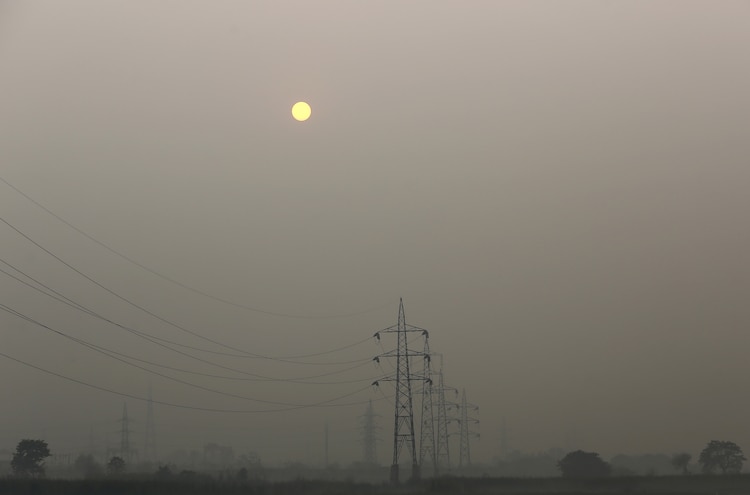
TiO2-based photocatalysis, the chemical process in which light accelerates chemical reactions, has been extensively studied for the de-pollution of both indoor and outdoor air, with the unique photocatalytic properties of TiO2 well-documented in converting nitrogen oxides and VOCs under ultraviolet irradiation.
Research published in the journal Materials found that TiO2-coated permeable concrete achieved a maximum nitrogen oxide removal efficiency of 77.5 per cent under laboratory conditions, with outdoor mock-up tests also confirming measurable pollutant reduction under natural light.
CAN SMOG-EATING SURFACES MAKE A DIFFERENCE?
Delhi’s air crisis is, in no small part, a NO2 crisis. Vehicular emissions are a major source of NO2 in the city, contributing significantly to the severe AQI levels that regularly push Delhi’s air into hazardous categories.
The IIT Madras study, led by Prof. Somnath C Roy from the Department of Physics, will first test these surfaces in a controlled smog chamber before real-world field trials on Delhi’s concrete, asphalt, metal panels, glass, and road surfaces.
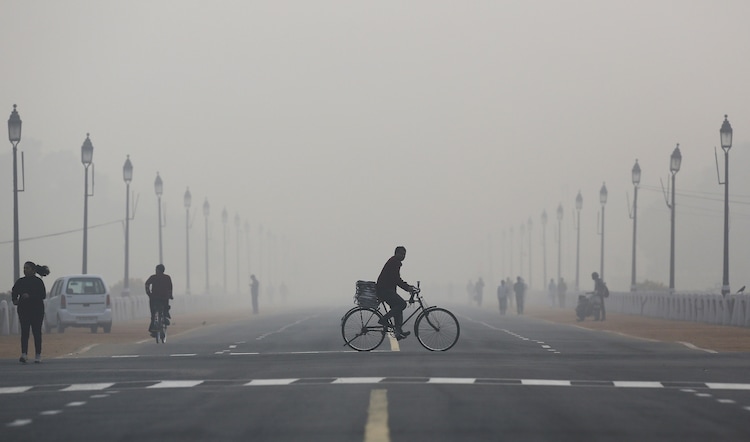
The study will also explore mounting TiO2-based panels on rooftops and street-light poles, similar in concept to solar panels, enabling active pollutant removal directly from ambient air.
The exteriors of high-rise buildings, which are largely exposed to the atmosphere, can potentially be coated with these nanomaterials to enable photocatalytic reduction of air pollutants in the surrounding environment.
WHY IS THIS A BIG DEAL FOR DELHI?
Delhi recorded zero “good” air quality days throughout 2025, with residents oscillating between moderate, poor, unhealthy, severe, and hazardous conditions for the entire year, indicating that episodic pollution control measures alone are not reversing the structural crisis.
A passive, infrastructure-based solution that works around the clock, does not require bans or behavioural changes, and can be scaled across the city, is the kind of intervention urban planners have been searching for.
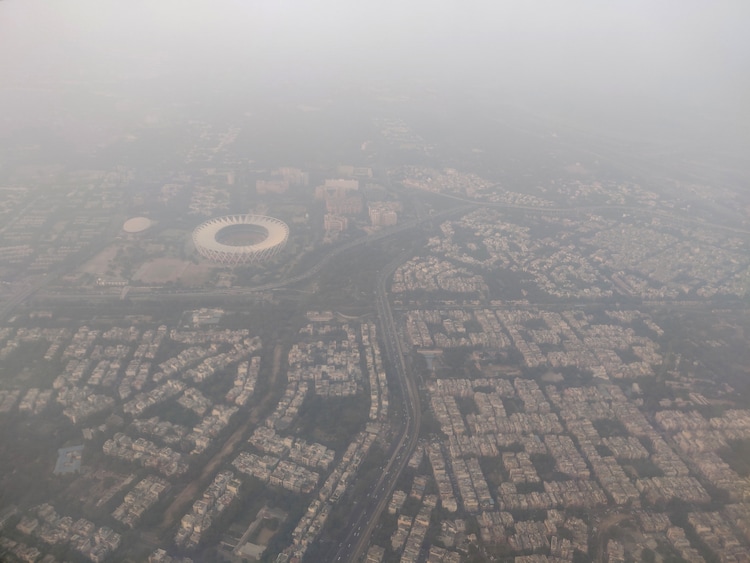
The Delhi government, subject to the study’s findings, aims to scale deployment during peak smog months later this year. Whether the “smog-eating city” remains a pilot or becomes a blueprint for urban India depends on what IIT Madras finds over the next six months.
If the science holds up at Delhi’s scale, the city’s pavements might one day do quietly what no policy has ever properly managed.