
The United States and Israel launched Operation Epic Fury against Iran on February 28, and one of the deadliest conflicts in the region in decades will complete one month in a few days. The US-Israeli assault has killed Ayatollah Ali Khamenei, the former Supreme Leader of Iran, along with several of the country’s top political and military figures. The bombings have also severely crippled Iran’s Navy and other military assets, but Tehran has refused to surrender and has promised to prolong the war until its enemies are defeated.
While this is happening, another country is also facing the heat of the conflict, even though it is not directly involved in the US-Israeli war on Iran. That country is Lebanon, where Israel is currently carrying out a ground invasion.
Israeli airstrikes on Lebanon
Israel launched its first wave of airstrikes on Lebanon on March 2, following the Hezbollah attacks in response to the assassination of Ali Khamenei.
In the days that followed, Hezbollah and Israeli forces continued to engage in combat, resulting in near-daily airstrikes on the capital, Beirut, and other strongholds of the pro-Iranian militia.
Lebanese civilians pay the price
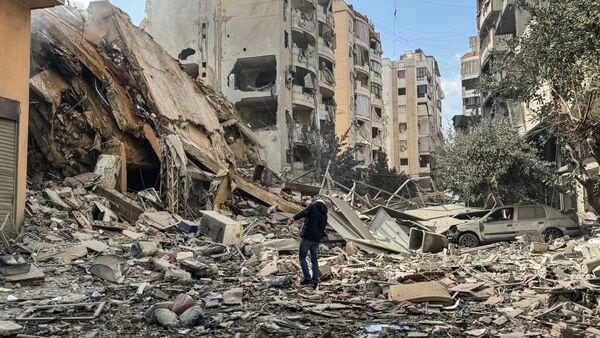
The Israeli bombardment has disproportionately targeted civilians and civilian infrastructure in Lebanon.
According to Lebanon’s Health Ministry, 26 people were killed and 86 wounded in Israeli attacks over the past 24 hours, increasing the toll of wounded to 3,315 since the latest Israel-Hezbollah war began.
More than one million displaced
According to the authorities, the war has forced more than one million people to flee their homes.
Israeli forces have told Lebanese to leave their homes across around 15% of the country, including the entire south, resulting in one of the fastest and largest population displacements in the country’s history.
Commenting on the ongoing crisis in Lebanon, Nicolas Von Arx, regional director of the International Committee of the Red Cross, warned on Friday that “the humanitarian situation is worsening and civilians, as usual, are paying the highest price” in the country.
After meeting Lebanese President Joseph Aoun, he said, “Civilians must be protected wherever they are, whether they remain in their homes or are forced to flee”.
370,000 children displaced
According to UNICEF, more than 370,000 children have been forced from their homes in Lebanon in just three weeks.
UNICEF’s country representative, Marcoluigi Corsi, said the scale of displacement was “staggering”, with 19,000 children uprooted daily, many for the second or third time since previous escalations just 15 months ago.
At least 121 children have been killed and 399 injured since the latest escalation began, according to UNICEF.
Schools become refugee shelters
Many civilians now face cramped and unsafe living conditions in more than 660 collective shelters, mostly schools.
The use of schools as shelters has interrupted education for more than 150,000 students, UNHCR’s Lebanon representative Karolina Lindholm Billing said.
Destruction of key bridges in the south has left about 150,000 people isolated and out of reach of humanitarian convoys, UNHCR said, adding that some relief movements have been denied permission due to security risks.
Essential infrastructure, including hospitals, water stations and schools, has been damaged or destroyed, cutting off tens of thousands from safe water and basic services, Corsi said.
The Lebanese Red Cross and other agencies are providing emergency health, shelter, and food assistance, but face immense strain as needs surge and staff themselves are affected by displacement and insecurity, a spokesperson for the International Federation of Red Cross and Red Crescent Societies (IFRC) in Lebanon said.
Israel continues push into Lebanon
Meanwhile, Israeli forces are also pushing into numerous towns in southern Lebanon, with officials saying they aim to create a security zone reaching the Litani River, some 30 kilometres from the border, to push Hezbollah back and protect northern Israeli communities.
Earlier, Israeli army spokesperson Effie Defrin said – Hezbollah is still operating and conducting attacks from southern Lebanon.”
“If the Lebanese government will not disarm Hezbollah, the IDF (army) will,” he said.
- The ongoing conflict in Iran has triggered severe humanitarian repercussions in Lebanon.
- Over one million people have been displaced, with significant impacts on children and education.
- International aid efforts are strained, highlighting the urgent need for humanitarian intervention.


