
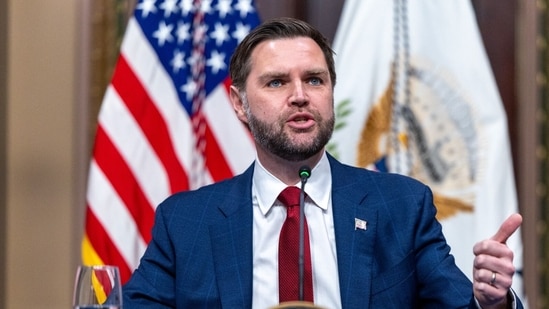
United States Vice President JD Vance held a tense phone call with Israeli Prime Minister Benjamin Netanyahu, wherein he questioned the latter’s overly “optimistic” assumptions on the conflict in West Asia, Axios reported.
Vance, during his conversation with the Israeli PM, allegedly flagged that several of Netanyahu’s predictions on the war had proved far too optimistic, including the prospects of an uprising which would bring in regime change, Axios cited an Israeli and US source as saying.
“Before the war, Bibi really sold it to the president as being easy, as regime change being a lot likelier than it was. And the VP was clear-eyed about some of those statements,” the US source said. HT has not independently verified the authenticity of the information.
This comes days after the US confirmed that Vance had been a part of national security discussions related to Iran throughout the Trump administration. “The vice president has been by the president’s side every step of the way, and any reporting otherwise is just completely false,” White House press secretary Karoline Leavitt said, according to Reuters news agency.
The US Vice President has allegedly been entrusted with steering US efforts to end the conflict in the Middle East. Vance has already held multiple phone calls with Israeli PM Netanyahu, and met representatives of Gulf countries while also being involved in indirect communications with the Iranian leaders, Axios reported.
‘A matter of weeks, not months’: Rubio
Regarding the time frame for ending the conflict, US Secretary of State Marco Rubio said it would be a “matter of weeks.”
After the G7 meeting in Paris, France, Rubio told reporters that Washington was “on or ahead of schedule in” the military operations in Iran, Reuters news agency reported.. He said that the US expected to “conclude it at the appropriate time here – a matter of weeks, not months.”
Rubio said that the US could achieve its war objectives without deploying any ground troops in the region, but said that others including paratroopers were being sent “to give the president maximum optionality and maximum opportunity to adjust the contingencies, should they emerge.”


