
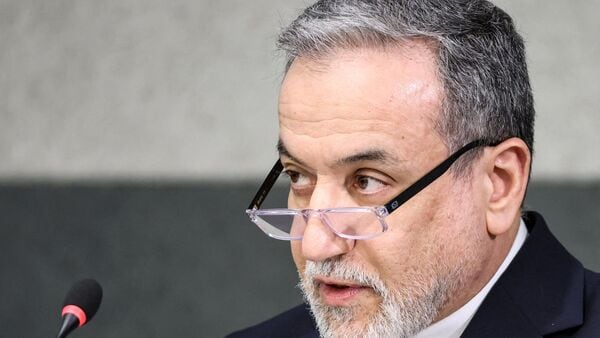
Iran is reviewing a United States proposal to end the war in the Gulf but has no intention of holding talks to wind down the widening Middle East conflict, the country’s foreign minister said, according to a Reuters report.
The comments by Iranian Foreign Minister Abbas Araghchi suggested that Tehran was willing to negotiate an end to the war if its demands were met. This is a deviation from Iran’s initial negative response, as Iranian officials publicly opposed the prospect of negotiations with the US.
Speaking to state television, Araghchi said the proposal is under consideration by Iran’s top leadership, even as he rejected any suggestion of direct engagement.
The exchange of messages through mediators “does not mean negotiations with the US, Araghchi said on state television, as per Reuters report.
Araghchi also confirmed that Washington has been sending messages through multiple intermediaries, but stressed that Tehran does not view this as formal dialogue. “They put forward ideas in their messages that were conveyed to top authorities, and if necessary, a position will be announced by them,” he said.
Araghchi said Iran is not seeking a prolonged conflict but wants a permanent resolution — on its own terms. “Iran is not seeking war; it wants a permanent end to the conflict,” he said.
‘Lebanon must be included’
Iran has told intermediaries that Lebanon must be included in any ceasefire agreement with the US and Israel, six regional sources familiar with Iran’s position told Reuters
US President Donald Trump, speaking at a Wednesday night event in Washington, said that Iranian leaders “are negotiating, by the way, and they want to make a deal so badly, but they’re afraid to say it because they will be killed by their own people. They’re also afraid they’ll be killed by us.”
Trump’s 15-point proposal, sent through Pakistan, calls for removing Iran’s stocks of highly enriched uranium, halting enrichment, curbing its ballistic missile program and cutting off funding for regional allies, according to three Israeli cabinet sources familiar with the plan.
The conflict in West Asia has entered its fourth week, disrupting trade routes through the Strait of Hormuz. Tensions escalated following the killing of 86-year-old Iran’s Supreme Leader, Ayatollah Ali Khamenei, in joint military strikes by the US and Israel on 28 February.
In retaliation, Iran targeted Israeli and US assets across several Gulf countries, causing further disruptions to the waterway and impacting international energy markets as well as global economic stability.
Iran’s actions targeting regional energy infrastructure and restricting movement through the Strait of Hormuz have pushed oil prices higher, increasing pressure on the US and its allies to secure a resolution, according to several reports.
Trump will ensure they are hit harder: White House
The White House declined to disclose specifics of its proposal and threatened to escalate its strikes.
“If they fail to understand that they have been defeated militarily, and will continue to be, President Trump will ensure they are hit harder than they have ever been hit before,” White House press secretary Karoline Leavitt told reporters.
A senior Israeli defence official said Israel was sceptical Iran would agree to the terms, and that Israel was concerned US negotiators might make concessions. Israel also wants any agreement to preserve its option to conduct pre-emptive strikes, a second source said.
The Israeli military on Wednesday described several new waves of attacks on Iran during the day, including one on Iran’s construction of ships and submarines. The semi-official Iranian SNN News Agency said a residential area was hit in Tehran, with rescuers searching the rubble. Kuwait and Saudi Arabia said they repelled new drone attacks.
The Pentagon is meanwhile planning to send thousands of airborne troops to the Gulf to give Trump more options to order a ground assault, Reuters said, quoting sources. The report added that two Marine contingents are already on their way. The first Marine unit, aboard a huge amphibious assault ship, could arrive around the end of the month.
Iran is not seeking war; it wants a permanent end to the conflict.
Iran’s Parliament Speaker Mohammad Baqer Ghalibaf said his country would attack an unnamed neighbouring country if it cooperated with efforts by “the enemies” to occupy one of its islands.
Since the start of what the US calls “Operation Epic Fury“, Iran has attacked countries that host US bases and effectively closed the Strait of Hormuz, a conduit for a fifth of the world’s oil and liquefied natural gas.
(With Reuters inputs)


