
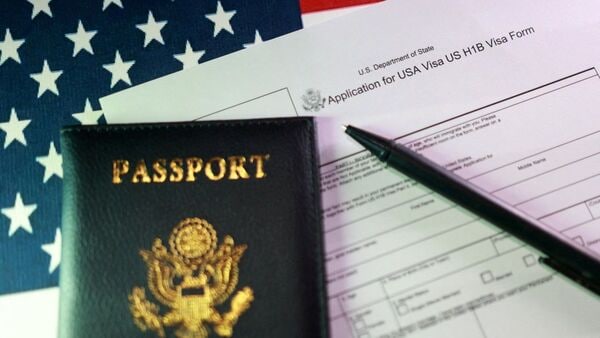
The United States has expanded its social media screening and vetting process to include more visa categories. This practice was first introduced for F, M, and J visa applicants and later expanded to H-1B and H-4 applicants (H-1B dependents) beginning 15 December 2025.
Now, the social media vetting will be done for these additional non-immigrant visa classifications as well: All A-3, C-3 (if a domestic worker), G-5, H-3, H-4 dependents of H-3, K-1, K-2, K-3, Q, R-1, R-2, S, T, and U. The US will begin to vet applications for these visas from 30 March 2026.
“These are in addition to the H-1B applicants and their dependents, and the F, M, and J student and exchange visitor visa applicants already subject to this review,” the US Travel Department said in a statement released on 25 March.
What do applicants need to do now?
The US department directed “all applicants for A-3, C-3 (if a domestic worker), G-5, H-3, H-4 dependents of H-3, K-1, K-2, K-3, Q, R-1, R-2, S, T, U, H-1B, H-4, F, M, and J nonimmigrant visas” to adjust the privacy settings on all of their social media profiles to “public” or “open” to facilitate this vetting process.
What is social media vetting?
The applicant are now asked to share all their social media handles and usernames used in the past five years. The officers check applicants’ social media activities.
Why social media vetting?
The US introduced social media vetting to review applicants’ online presence. The US Embassy and Consulates in Mexico said the vetting is “necessary to establish their [applicants’] identity and admissibility to the United States under US law.”
Former US Visa Officer Mandy says officials are “vetting your social media to ensure that you are not someone with problems.”
The US Travel Department said it uses all available information in visa screening and vetting to identify visa applicants who are “inadmissible to the United States, including those who pose a threat to US national security or public safety”.
The US believes that “every visa adjudication is a national security decision”, and therefore it conducts thorough vetting of all visa applicants.
“The United States must be vigilant during the visa issuance process to ensure that those applying for admission into the United States do not intend to harm Americans and our national interests, and that all applicants credibly establish their eligibility for the visa sought, including that they intend to engage in activities consistent with the terms for their admission,” the department said.
How can your social media presence impact your visa application?
Your social media activity plays a crucial role in the approval of your US visa application. The applicants must be extremely cautious with their social media presence, as even a slight “misrepresentation” of any post, comment or move, such as deleting a post, could lead to delay or cancellation of your visa.
What are the red flags?
1. If you don’t disclose any social media account
2. Using language suggesting “hostile attitudes” toward the US
3. Antisemitic, racist, or otherwise hateful language
4. Possible links to, or endorsement of, extremist groups or groups the US considers terrorist organisations
5. Inconsistencies between online content and submitted application materials
What you should/should not do:
Should you declare a social media account that you haven’t been using in the past five years? Yes. If you don’t list an account, it may be considered misrepresentation, even if the account is inactive. You must list URLs for all your social media handles on the DS-160 form.
Should you delete any social media post that you feel could impact your application? No. Stanford University’s Bechtel International Center suggests against abruptly deleting large amounts of content immediately prior to your interview.
Should you keep any of your social media accounts a secret? Hiding accounts is risky. “That’s not a good idea,” says Attorney Brian Burke of the Shihab Burke LLC Immigration Lawyers. He says in a video, “… if you leave things off, you’ll be engaged in fraud or misinterpretation.” Meanwhile, a Reddit user said, “…caught lying on your application is way worse than having some questionable posts.”
When should you make your accounts ‘public’? A former visa officer, Mandy Furbacher, said one must make sure that all their social media accounts, any that they have ever used, are set to public before their visa interview.
What if social media vetting didn’t go well?
A US Immigration Attorney says that US officials don’t explicitly state the reason for an application’s cancellation.
Some consulates may adjust or reschedule appointments to implement new vetting procedures. Also, social media review may lead to additional administrative processing, which can extend visa timelines, Bechtel International Center explained on its website.


