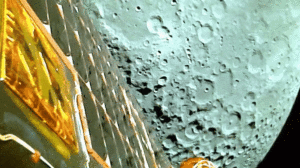
How long will Artemis-IV astronauts live and work on the Moon? Nasa reveals

Nasa has revealed new details about how long astronauts will live and work on the Moon during its first crewed lunar landing in over five decades, marking a major step forward in the agency’s Artemis programme.

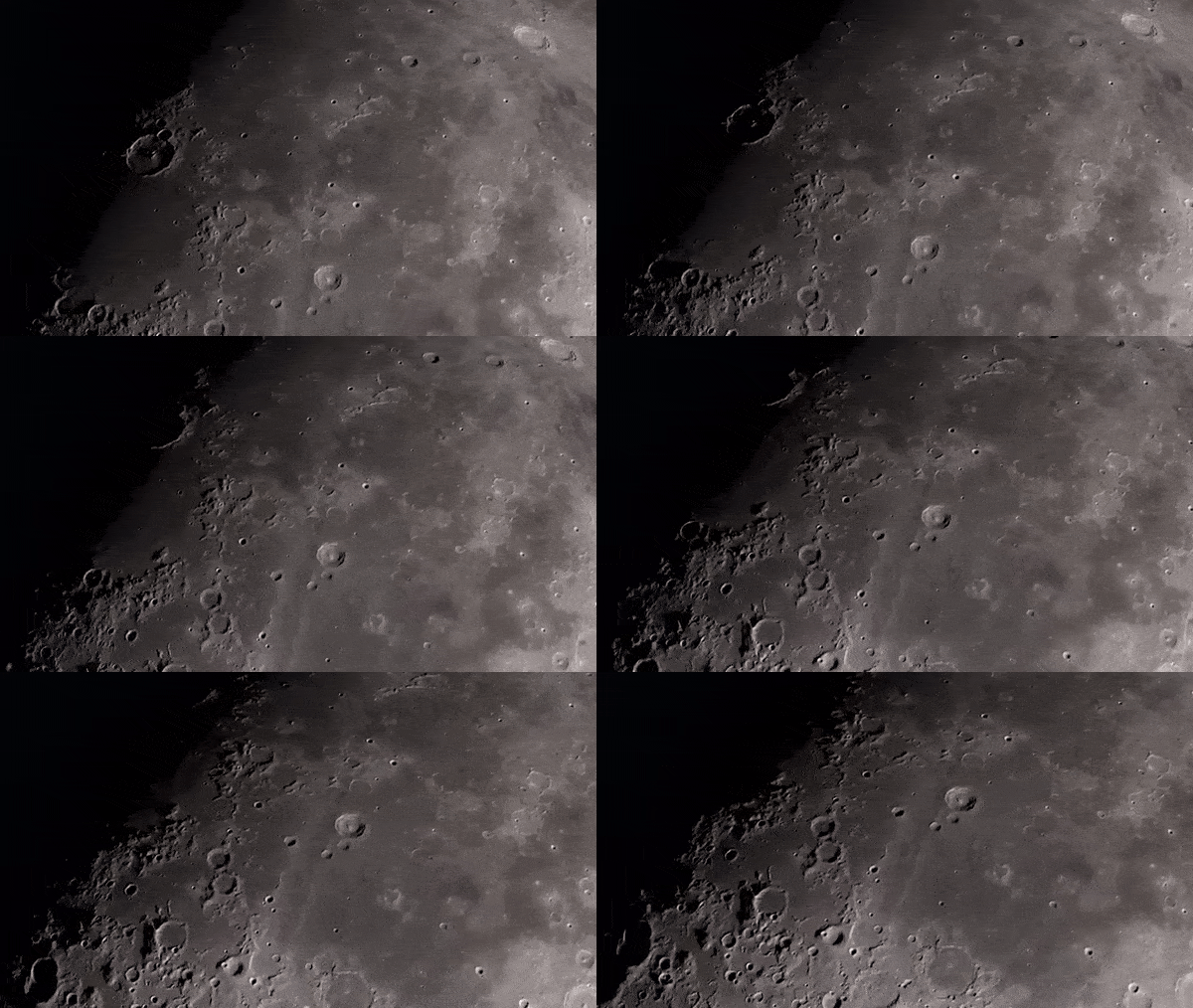
The mission, known as Artemis IV, will see four astronauts travel to lunar orbit, with two of them descending to the Moon’s south polar region, an area of intense scientific interest due to the presence of water ice deposits.

The mission will be humanity’s first return to the lunar surface since Apollo 17 in 1972.
Moon

WHAT IS THE ARTEMIS-IV MISSION?

According to Nasa’s updated architecture, Artemis IV will last approximately 21 days from launch to return. During this time, the two astronauts assigned to the surface mission will be living and conducting experiments on the Moon.

Artemis-IV mission is a significant upgrade over the Apollo missions, where astronauts typically spent just a few days on the lunar surface.

The announcement builds on recent changes to the Artemis roadmap. The agency confirmed that it is standardising configurations for the Space Launch System (SLS) rocket to improve efficiency and reliability across missions.

Nasa has also added an additional mission to the schedule in 2027 and plans to conduct at least one crewed lunar landing every year thereafter.
Artemis

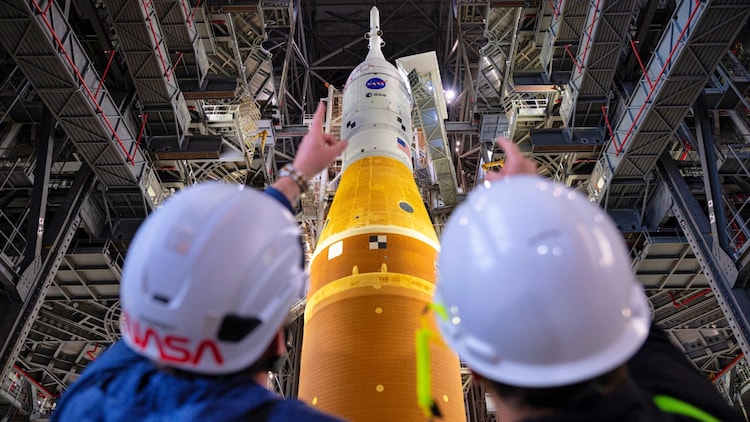
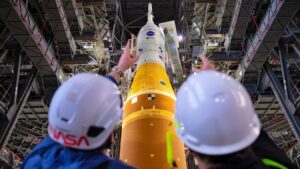
Nasa is preparing to launch Artemis-II. (Photo: Nasa)

Under this revised plan, Artemis III, now targeted for 2027, will not immediately attempt a lunar landing. Instead, it will focus on testing integrated systems and operational capabilities in Earth orbit, ensuring all components function seamlessly before committing astronauts to the surface during Artemis IV.

Nasa officials say this phased approach is designed to reduce risks while enabling more sustainable and frequent missions in the long term.

Looking beyond Artemis V, the agency announced that it plans to rely on commercially procured and reusable hardware increasingly.

HOW LONG WILL ASTRONAUTS LIVE ON THE MOON?

Once the two astronauts on Artemis-IV land on the surface of the Moon, they will spend about a week exploring the rugged lunar terrain.

The extended surface stay of nearly a week signals Nasa’s transition from short exploratory visits to longer, more productive missions, laying the groundwork for a permanent human foothold beyond Earth.
Chandrayaan-3

This shift aims to lower costs and increase mission cadence, with an initial goal of conducting crewed lunar landings every six months. As technologies mature, Nasa expects this frequency to rise further.

In parallel, Nasa is rethinking its long-term lunar infrastructure strategy. The agency plans to pause development of the Gateway space station in its current form and instead prioritise systems that directly support sustained human presence on the Moon.

This includes habitats, power systems and surface mobility solutions that can enable astronauts to live and work on the lunar surface for extended durations.
Latest

Can humans survive Mars gravity? New study flags muscle loss risk for astronauts

NASA and scientists are studying the effects of low gravity on human muscle to prepare for Mars missions. Research on mice revealed that 0.33g partially mitigat

Light rain likely across north India tonight, western disturbance building up

In the Himalayan region, light rainfall and snowfall are expected over Jammu and Kashmir, Himachal Pradesh and Uttarakhand, indicating continued western disturb

India sets bold climate goals: 45% emission reduction, 60% non-fossil power by 2035

New targets, old track record. India has stepped up on the global climate stage with ambition.

Cold wave turns silent killer: Study finds higher death risk than heat

People who are older or have chronic conditions like diabetes, heart failure, or kidney disease are significantly more vulnerable to these effects.

Artemis-II Moon mission launch on April 2: Biggest risks the four astronauts face

It will be the first time humans will travel on the Space Launch System (SLS) rocket and Orion spacecraft, and would also be the farthest we have travelled from

Topics

Binance Tightens Market Making Rules In Wake of Crash Criticism

Binance, the world’s largest crypto exchange, is tightening rules for token issuers and providers of liquidity on the platform following criticism of digital-

Jury finds Instagram and YouTube liable in a landmark social media addiction trial

Jury finds Instagram and YouTube liable in a landmark social media addiction trial

Iran claims strike on US F-18 fighter jet; US Central Command rejects claim

Iran’s latest assertion marks the most recent in a series of contested claims as tensions continue to escalate between Tehran and Washington.

Zohran Mamdani gets heckled during a press conference, says ‘If I don’t hear him yelling at me…’

US News: New York City mayor Zohran Mamdani was interrupted by a heckler as he was addressing a press conference on affordable housing. As Mamdani was speaking.

IPL 2026: Gujarat Titans pick left-arm pacer to replace injured Prithviraj Yarra

Cricket News: NEW DELHI: Gujarat Titans have made a key change ahead of IPL 2026, bringing in left-arm pacer Kulwant Khejroliya as a replacement for the injured

‘Game-changer’ chemical Dew Cure to debut in IPL

Cricket News: The dew factor has long been a major influence in night games. To ensure a level playing field and eliminate excess moisture, a chemical called De

Gemini gets a major upgrade as Google adds 3-minute AI music generation: here’s how it works

Gemini's new Lyria 3 Pro integration enables the creation of 3-minute music tracks with improved fidelity and customization. It supports diverse applications, f

Dead ball! Umpire pulls up Sri Lankan spinner for copying Usman Tariq action – Watch

Cricket News: Pakistan spinner Usman Tariq's much-debated bowling action is drawing attention across levels of cricket, with its distinct pause before release n
spot_img

Related Articles

Popular Categories

spot_imgspot_img