
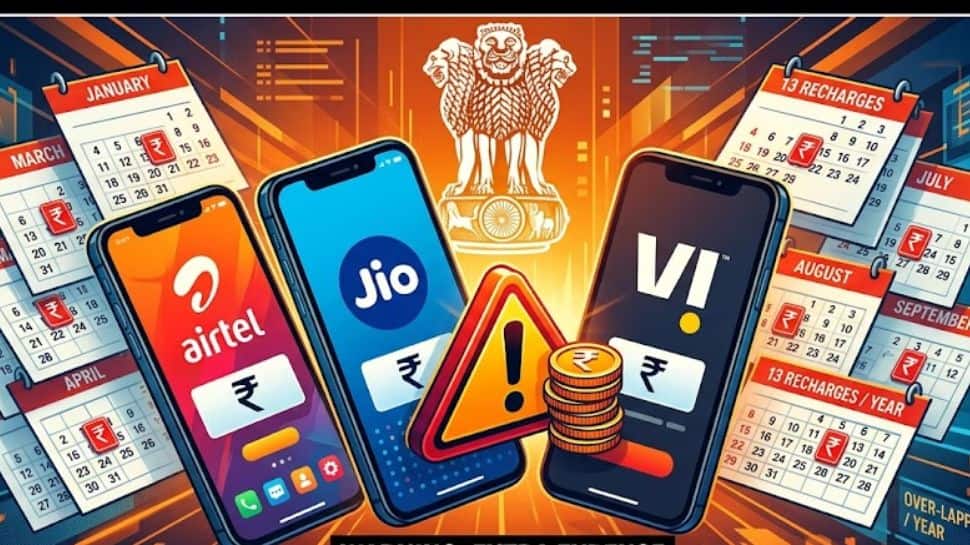
TRAI Prepaid Plan Rules: India’s telecom pricing model has come under fresh scrutiny as concerns grow over the widespread use of 28-day “monthly” recharge plans. While telecom companies market these packs as monthly options, they fall short of a full 30-day cycle, effectively pushing users to recharge more frequently. The government has taken action for Airtel, Jio, and Vi users, ending the 13-times-a-year recharge cycle.
The issue was recently raised in Parliament by (AAP) MP Raghav Chadha, who highlighted how this system forces consumers to recharge 13 times a year instead of the usual 12. This not only disrupts budgeting for millions of mobile users but also increases their annual spending.
With rising telecom tariffs already impacting consumers, the debate around plan validity and transparency has gained momentum. The government and regulators are now stepping in to ensure fair practices and promote true monthly plans that offer better value for money.
Govt pushes telecom firms to offer true 30-day plans
Following the concerns raised, Union Minister Jyotiraditya Scindia said the government is urging telecom companies to actively promote 30-day recharge plans. He added that the Telecom Regulatory Authority of India has already directed operators to offer at least one plan with a full 30-day validity, ensuring users have access to a true monthly option.
TRAI’s 2022 Rule mandates 30-day prepaid plans
Back in 2022, the Telecom Regulatory Authority of India stepped in with a key tariff regulation to address growing concerns around prepaid plans. It mandated that every telecom operator must offer at least one plan with a full 30-day validity across all prepaid categories. The move was aimed at giving users a genuine “monthly” option, as many felt this was missing amid the dominance of 28-day plans. It also sought to reduce the need for frequent recharges and bring more transparency to telecom pricing.
Why 28-day plans force users to recharge 13 times year
A 28-day recharge plan falls short by 2 to 3 days each month. Over time, this gap adds up, forcing users to recharge 13 times a year to stay connected for all 365 days. While this model works in favour of telecom companies, it ends up increasing the overall cost burden on users.
Midnight data reset: Another concern for mobile users
Raghav Chadha also flagged another concern, pointing to the way unused daily data is treated under many telecom plans. He noted that any data left at the end of the day expires at midnight. For instance, if a user is entitled to 2GB per day but consumes only 1.5GB, the remaining 0.5GB is forfeited. This, he argued, leads to a clear loss for consumers who have already paid for the full data allocation.
Push for 30-day validity and longer incoming services
AAP (MP) Raghav Chadha has called for a complete shift away from 28-day recharge packs, urging that all “monthly” plans should come with a full 30-day validity. He also proposed that users should continue to receive incoming calls and messages for at least one year even after their recharge expires. However, under existing regulations, the Telecom Regulatory Authority of India requires that a mobile number cannot be deactivated for a minimum of 90 days.
How Jio, Airtel, and Vi structure 30-day plans
Jio currently offers three 30-day plans priced at Rs 219, Rs 289, and Rs 359. All of these are data-only packs, with no calling benefits. Airtel, on the other hand, provides two 30-day options: a Rs 219 plan that gives 3GB of data along with unlimited calling, and a Rs 100 plan that offers 6GB of data but no unlimited calls. Vodafone Idea (Vi) has a 30-day combo plan priced at Rs 204, which comes with limited talktime and no significant SMS benefits.
Critics say these plans show how telecom companies are finding ways around TRAI’s rules. By offering “data-only” and carefully structured “combo” packs, they can technically comply with regulations while still confusing users and policy makers. This, experts argue, allows operators to shape tariffs in ways that benefit the company but make it harder for customers to get full value for money.
Who controls mobile plan pricing in India?
India’s telecom sector functions under a “tariff forbearance” regime, giving operators the flexibility to set their own pricing and design plans. While the government does not directly regulate tariffs, the Telecom Regulatory Authority of India continues to monitor the sector to ensure that consumer interests are protected and companies do not engage in unfair practices. As the debate around plan validity gains traction, the focus is now on whether this regulatory balance can deliver more transparent and user-friendly telecom offerings.


