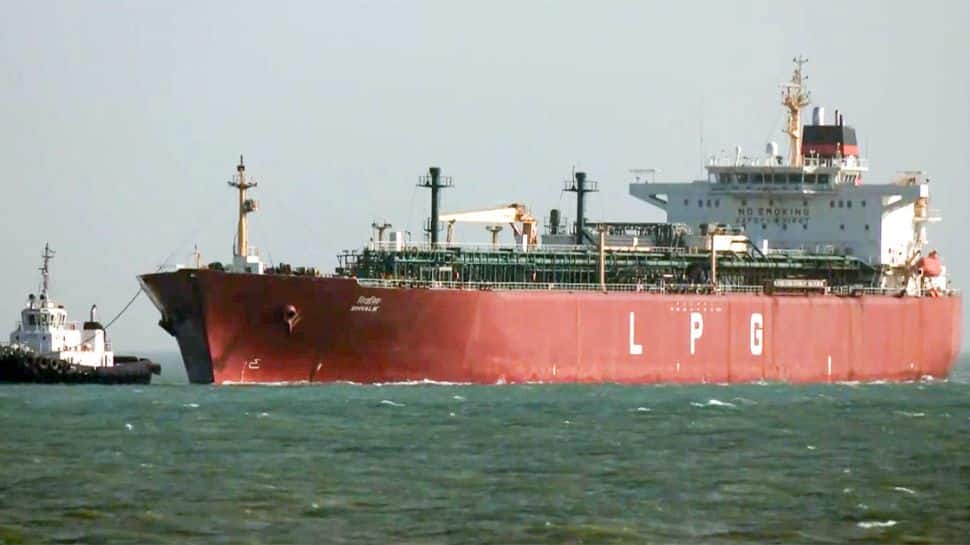
Indian vessels passing through Strait of Hormuz: In the increasingly volatile waters of the Strait of Hormuz, the Indian Navy is quietly playing a crucial role in ensuring the country’s energy lifeline remains intact.
With tensions in West Asia disrupting global energy flows, India has managed to keep its shipments moving, aided by diplomatic engagement with Iran that allows Indian vessels to pass through the strategic chokepoint. But beyond diplomacy, it is the Navy’s on-ground or rather, at-sea coordination that is proving vital.
Tasked with ensuring the safe movement of oil tankers, the Indian Navy’s role goes beyond conventional escort duties. Instead of simply accompanying ships, naval teams are actively guiding them through the narrow and sensitive passage, offering route-specific instructions at every stage.
‘Operation Urja Suraksha’
Under ‘Operation Urja Suraksha’, more than five advanced warships have been deployed in and around the Strait. Officials say the Navy maintains constant communication with vessels preparing to leave the Persian Gulf, directing them along carefully assessed paths to minimise risk.
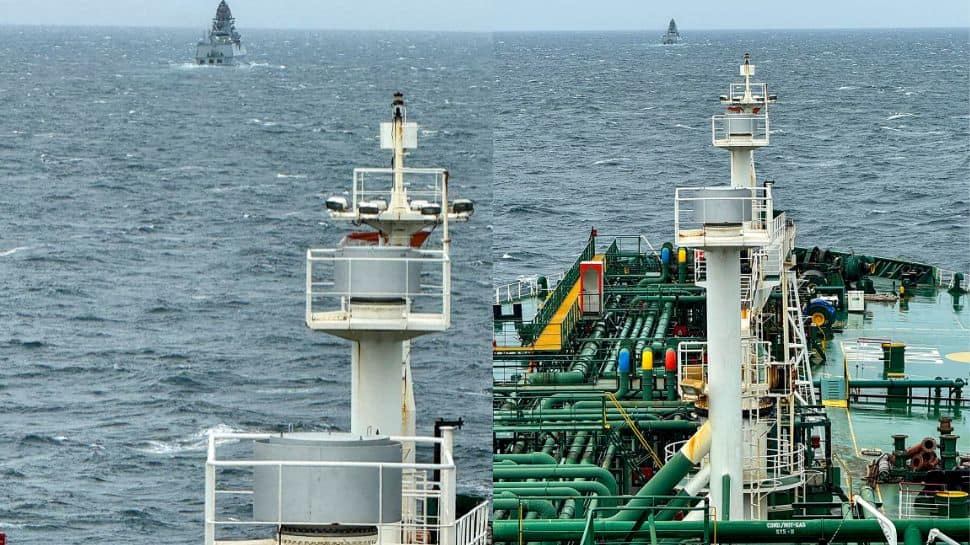
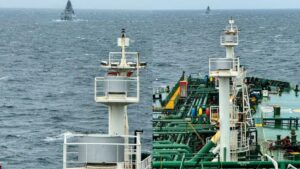
Once ships exit the Strait, Indian destroyers and frigates take over, escorting them through the initial phase of their onward journey. The strategy blends navigation support with layered security, ensuring both guidance and protection.
This effort is backed by an expanded naval presence in the Gulf of Oman, where additional assets have been stationed to sustain uninterrupted operations.
For tanker crews, however, the journey remains far from routine. Safe navigation in such waters depends heavily on hydrographic charts detailed mappings of the seabed that help vessels avoid hazards. Without these, transiting such a sensitive corridor would be significantly more dangerous.
Iran deploying underwater mines?
Concerns have grown amid reports that Iran may have deployed underwater mines in the region, adding another layer of uncertainty. Combined with other potential threats, the risks underline the importance of precise navigation.
Here, the Navy’s role becomes indispensable. By guiding ships along verified safe routes, it helps crews steer clear of unseen dangers while maintaining steady movement through the corridor.
Much of this capability stems from India’s expertise in hydrography. The seabed is not static depths vary sharply, and natural events can alter underwater terrain over time. Specialised survey vessels continuously map these changes, producing charts that are relied upon by a wide range of maritime operators.
India’s hydrographic work also extends beyond its own waters. At the request of partner nations, the Indian Navy assists in surveying Exclusive Economic Zones and preparing navigation charts, contributing to safer seas across the Indian Ocean Region.
Once prepared, these charts are internationally recognised and widely used by both commercial and military vessels.
In a region fraught with tension, this blend of strategic presence, technical expertise and steady coordination is helping ensure that ships continue to move cautiously but confidently through one of the world’s most critical maritime routes.
(With IANS inputs)