Billionaire entrepreneur Elon Musk has once again laid out an ambitious vision for humanity to become a galactic civilisation.
At an event held on March 21 in Austin, Texas, Elon Musk unveiled a new initiative involving SpaceX, Tesla, and his AI venture xAI to dramatically scale up the production of advanced computer chips required for both Earth-based and space technologies.
The proposed Terafab project aims to manufacture one terawatt worth of processors each year, around 50 times the current global output of high-end chips used in fields like artificial intelligence.
Musk has long argued that humanity must expand beyond Earth to ensure its survival.
WHAT IS A GALACTIC CIVILISATION?
A “galactic civilisation,” in simple terms, refers to humans living across multiple planets, possibly even star systems, rather than being confined to Earth.
His company SpaceX had already been working toward this through its Starship programme, designed to carry humans and cargo to Mars. However, the plans have been put on the backburner with the company recently refocussing its attention to first reaching the Moon.
The idea is to eventually build self-sustaining colonies beyond Earth, starting with Moon, Mars and then expanding further over time.
THE KARDASHEV SCALE: WHERE DOES HUMANITY STAND?
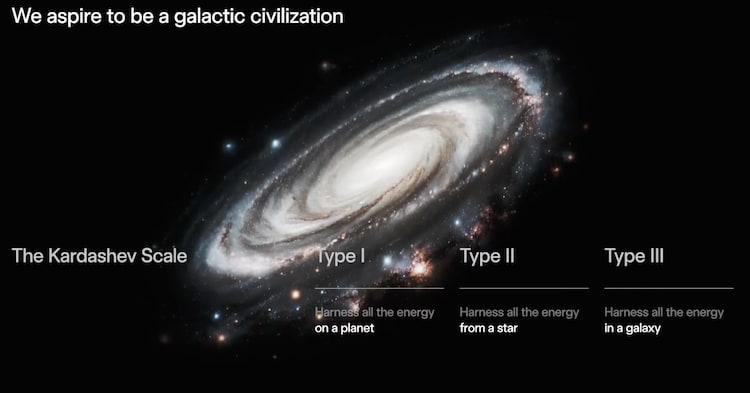
The idea of a “galactic civilisation” can be better understood through the Kardashev scale, a method of measuring a civilisation’s technological advancement based on energy use.
- Type I: Uses all energy available on its home planet
- Type II: Harnesses the energy of its star
- Type III: Controls energy at the scale of its galaxy
Currently, humanity is below Type I. Musk’s vision, spreading across planets and building massive space infrastructure, would move us closer to higher levels on this scale.
WHAT IS THE TERAFAB PROJECT?
Musk announced the Terafab initiative, a joint effort involving SpaceX, Tesla, and xAI with the goal to manufacture an unprecedented volume of advanced computer chips.
The idea is simple enhance the capacity, reach, and availability of chips to enhance Artificial Intelligence.
- Terafab aims to produce one terawatt of processors annually
- This is about 50 times current global production of high-end chips used in AI and computing
- Musk called these chips the “missing ingredient” for future space infrastructure
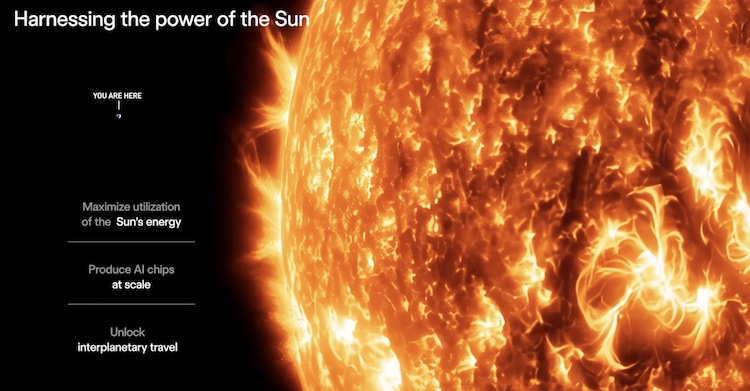
These processors would power massive satellite networks that could function as orbital data centres, essentially bringing cloud computing into space. Such systems could support communication, navigation, AI operations, and even future space colonies.
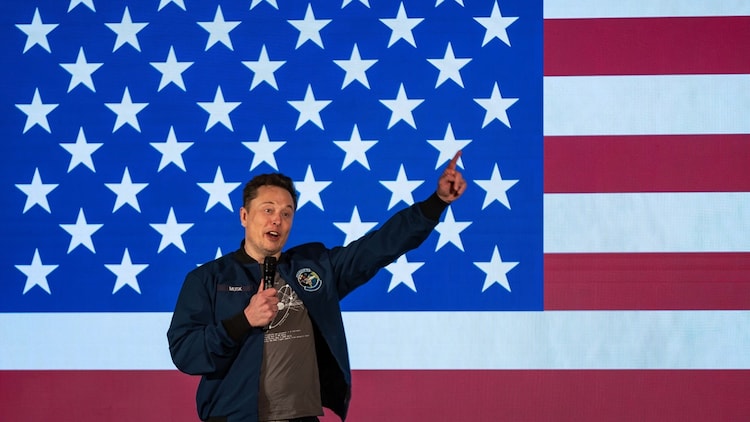
“We either build the Terafab, or we don’t have the chips,” Musk said, underlining how central computing power is to his long-term plans.
WHY DO AI CHIPS MATTER FOR SPACE?
Modern space missions increasingly rely on data, huge amounts of it. From autonomous spacecraft to AI-driven systems, advanced chips are critical.
Musk’s vision includes deploying large satellite constellations that not only provide internet (like Starlink) but also process data in orbit, reducing reliance on Earth-based infrastructure.
While still highly ambitious, Musk’s plans reflect a growing shift in thinking about humanity’s future.
By combining space travel, artificial intelligence, and large-scale manufacturing, projects like Terafab aim to lay the groundwork for life beyond Earth.
Whether or not a true “galactic civilisation” becomes reality, the steps being taken today could redefine humanity’s place in the universe.