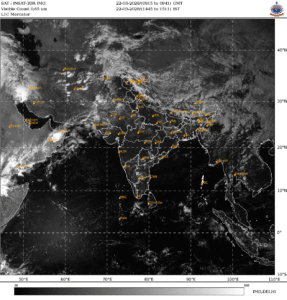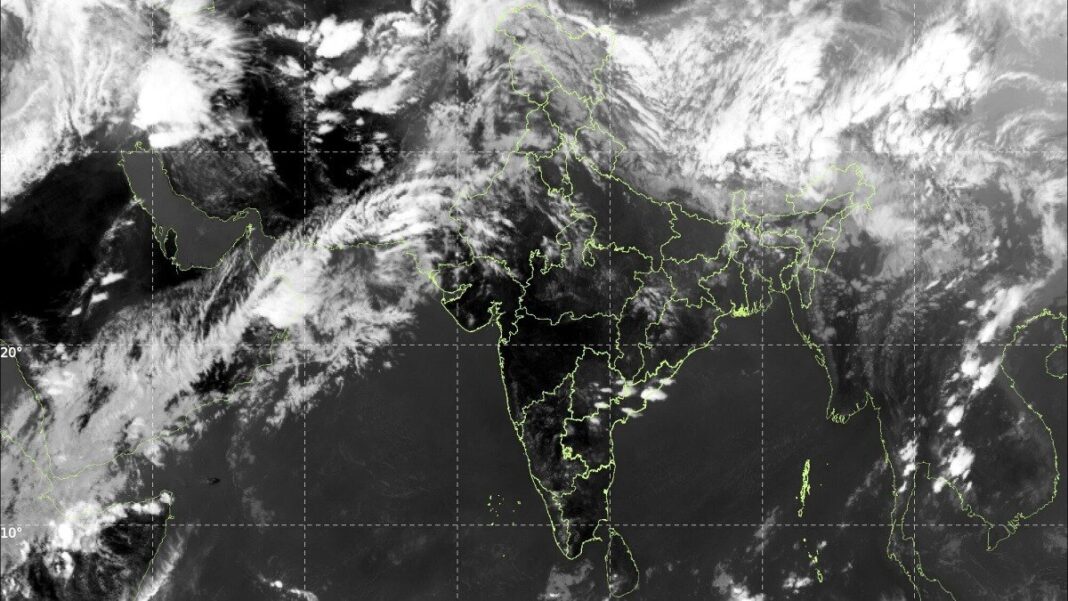
Rainfall activity across north India is far from over, with multiple weak western disturbances lining up to impact the region over the coming days, bringing fluctuating weather conditions, cloud cover, and spells of light rain.
According to meteorological assessments, these systems, though weaker than the recent active spell, are expected to arrive one after another over the Indian subcontinent, preventing the weather from stabilising. As a result, parts of north India are likely to experience a mix of cloudy skies, brief rainfall, and shifting temperatures through the week.
A feeble western disturbance is set to influence weather conditions on Monday, March 23, particularly across Delhi-NCR, Haryana, Punjab, north Rajasthan, and Chandigarh.
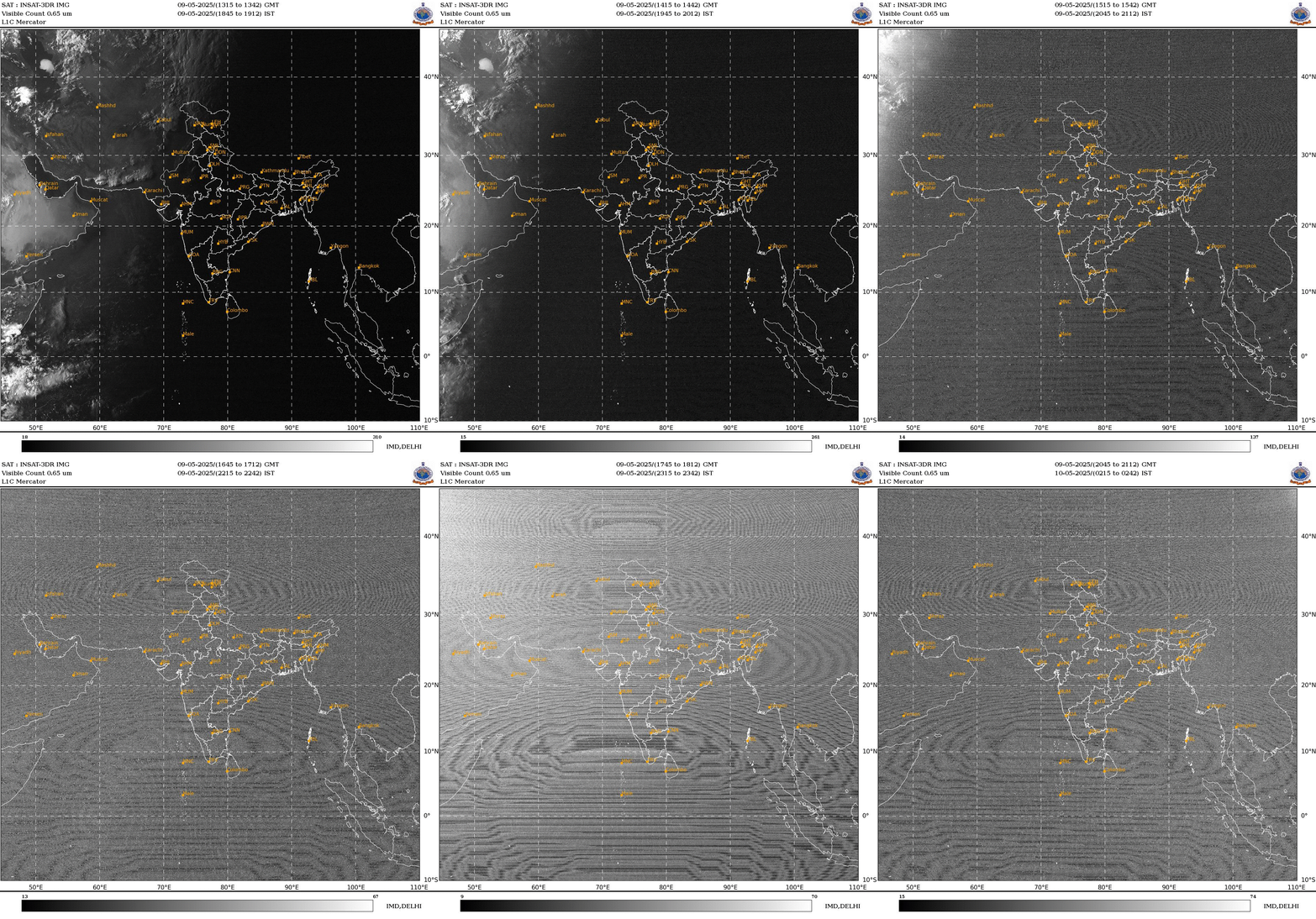
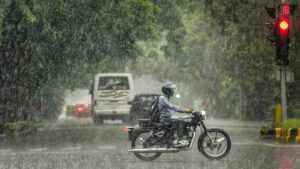
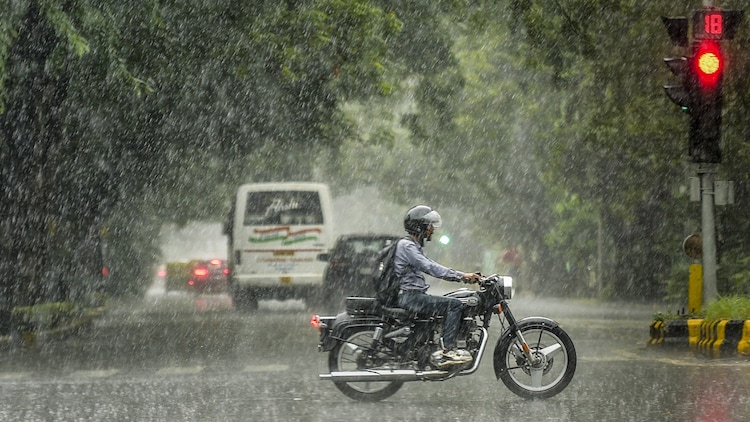
Cloudy skies are expected through the day, accompanied by isolated light to moderate rainfall from morning until late evening hours.
However, experts caution that this system will not bring widespread rain. Nearly 60–70% of the geographical area in these regions may remain dry, with precipitation occurring only in scattered pockets.
In the Himalayan region, the same system is likely to trigger light snowfall in parts of Kashmir, Himachal Pradesh, and Uttarakhand. The snowfall is expected to remain limited in intensity but could contribute to a brief drop in temperatures in higher altitudes.
Following this, a short spell of dry and clear weather is expected across north India between March 24 and 25, offering temporary relief from the changing conditions. But the pause is unlikely to last long.
Another weak western disturbance is forecast to approach the region around March 26, once again increasing cloudiness and bringing the possibility of light precipitation in isolated areas. The repeated arrival of these systems is expected to keep weather patterns dynamic rather than settled.
While the overall impact of these disturbances remains uncertain and relatively mild compared to earlier events, the continuous shifts in weather and temperature could have health implications.
Sudden changes between warm days and cooler mornings and nights may lead to seasonal illnesses, particularly common cold and flu-like symptoms.
Residents are advised to remain cautious, especially during early mornings and late evenings when temperatures are likely to dip due to incoming northerly winds.
While intense rainfall may not be on the cards, north India is set for an extended period of unsettled weather, driven by a series of weak but persistent western disturbances.