
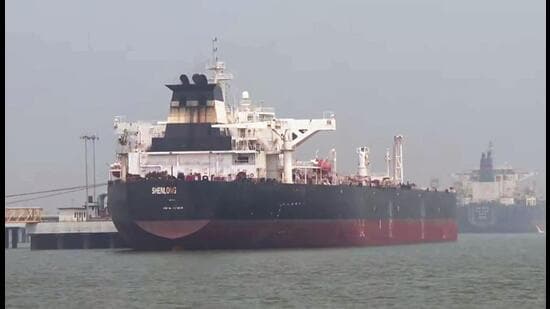
The US-Israeli air strikes on Iran and Tehran’s Gulf-wide retaliation with drones and missiles, now in their third week, have rocked global energy markets and affected economies worldwide. The Strait of Hormuz remains near-impassable. The US recently struck military targets at Iran’s Kharg Island, through which 90% of Iranian crude exports flow, while warning that its oil infrastructure could be next. Israel then escalated further by striking Iran’s South Pars gas field, the largest in the world, prompting Tehran to hit back at major energy facilities across Qatar, Saudi Arabia, Kuwait and the UAE. Brent crude has surged past $115 a barrel. What was intended as a swift assertion of US dominance has transformed into a widening regional conflict, leaving spiralling oil prices, damaged energy infrastructure and deepening instability as its principal dividends. Even overwhelming military power does not automatically translate into uncontested control.
Nearly 10 million Indian citizens live and work across the Gulf, remitting over $50 billion annually and sustaining millions of families at home. India also supplies 12% of the global seafaring workforce. As tensions continue to escalate, the safety of our citizens and protection of their livelihoods demand that India engage all parties with greater diplomatic assertiveness, commensurate with our huge stakes.
Almost half of India’s crude imports transit the Strait of Hormuz, while our gas dependence on it is even more concentrated. Ensuring the safe passage of Indian vessels through the Gulf will require our active diplomatic efforts with all combatants, including Iran. India secured the safe passage of two LPG tankers through the Strait by reaching out to Iran — evidence that our bilateral channels retain value even amid conflict. Nonetheless, the disruption in the Gulf has compelled our government to prioritise LPG supplies to households, leaving commercial consumers facing shortages.
After over a year of pressing us to wind down Russian crude purchases and imposing punitive tariffs linked to those imports, the US has given India a 30-day waiver to buy precisely that Russian crude. The speed with which the US pivoted from penalty to permission reveals how transactional its earlier pressure was. That window expires on April 4 and India’s energy policy must never again be left exposed to such outside whims. India values its comprehensive strategic partnership with the US, which has grown significantly in fields such as defence and technology. It is precisely because the relationship matters that the transactional treatment of our energy security is so damaging to the trust on which durable partnerships depend.
The Hormuz crisis underscores a widening disconnect between US military might and the achievement of durable strategic outcomes. The US remains the world’s foremost military power, with unmatched aircraft carrier strike groups, unrivalled air power projection, and a defence budget larger than its next 10 rivals combined. Yet raw military capability should not be mistaken for effective geopolitical influence.
Recent history illustrates the point. Conflicts from Vietnam to Iraq, Libya and Afghanistan have shown that overwhelming US military superiority is easy to deploy but seldom translates into favourable political outcomes. Despite unprecedented financial, intelligence and military backing to Ukraine by the US and its NATO partners since 2022, Russia has pursued a grinding war of attrition in which it increasingly holds the advantage.
Consider Yemen, where for years the Houthis have disrupted Red Sea shipping while weathering relentless US, British and Saudi air strikes. They have shown that American power can be painful to absorb, but it is not impossible to withstand. Consider the South China Sea, where the US navy regularly conducts Freedom of Navigation Operations, flies the flag and issues stern communiques signalling a commitment to open seas. China, meanwhile, continues to dredge, build, fortify, and consolidate its effective control over contested maritime space. Maintaining the oft-invoked “rules-based order” requires considerably more than periodically sailing through it.
The emerging pattern is that of a pre-eminent power that retains the capacity to punish but increasingly struggles to persuade. Secondary sanctions, export controls, and financial warfare are tools of a state that finds it harder to lead by example or consent. They are effective, up to a point, against weaker economies with limited financial alternatives, but their leverage diminishes as more countries experiment with settlement mechanisms that bypass the dollar.
Even US allies may be adjusting. The European Union’s pursuit of strategic autonomy, once dismissed in Washington as Gaullist affectation, is very gradually transforming into policy. France and Germany increasingly distinguish between NATO solidarity and automatic alignment with US strategic preferences. When Trump called on US allies to send warships to secure the Strait of Hormuz, six countries issued a carefully worded statement of readiness to contribute, while most simultaneously ruled out deploying warships during the conflict. The gesture of solidarity accompanied by the withholding of action captures the shift precisely.
India’s foreign policy rests on strategic autonomy and multi-alignment and the Hormuz crisis has vindicated both. Even as New Delhi recently co-sponsored a GCC-backed UN Security Council resolution criticising Iran’s actions against the Gulf states, its broader interest remains in preventing escalation while preserving freedom of engagement with all parties.
Buying discounted Russian crude saved us an estimated $16.7 billion in 2022–2024. Amid US pressure for over a year to force us to reduce Russian crude purchases, its share dipped to 21% of our import basket by January 2026, the lowest since late 2022. Some Indian buyers shifted back to Gulf suppliers, increasing our exposure to the very chokepoint now under strain. Over-dependence on any single corridor or supplier is a strategic liability. India’s energy procurement must be guided by price, reliability and supply security, and our own strategic calculus, not external pressures.
A strong, secure and prosperous India cannot serve as anyone’s camp follower. Healthy partnerships with the US, Russia, and other major players serve our national interests. As the world’s third largest oil consumer, fourth largest oil refiner, and fifth largest exporter of petroleum products, India wields leverage, while our growing economy gives us weight. Both must be used to secure energy on our terms.
The US is set to remain the pre-eminent global power until the middle of this century. Yet dominance exercised via financial coercion, air strikes, or the leveraging of weaker states is a diminished form of primacy, in a world characterised by the steady diffusion of economic weight, technological capacity, and political agency to a wider set of nations. For a re-emerging India, the challenge is to pragmatically pursue our interests with the confidence that multi-alignment is not hedging against uncertainties but prudent statecraft. In an increasingly fragmented world, India’s strongest safeguard lies in exercising strategic autonomy and practicing multi-alignment not as passive doctrines but as instruments of national will.
Ajai Malhotra is Distinguished Fellow, TERI, and former ambassador of India to Russia, Kuwait, UN/New York and Romania. The views expressed are personal


