
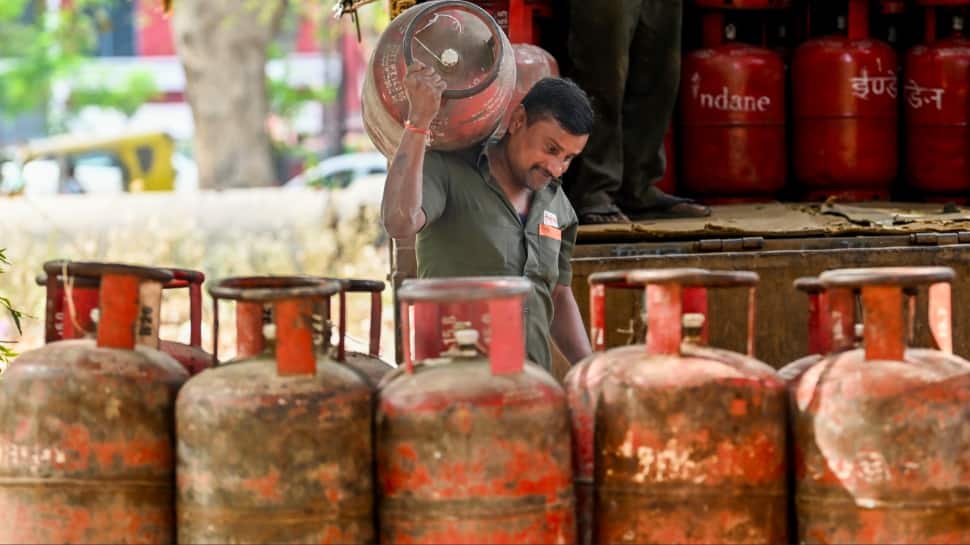
With every living expense being scrutinised based upon budget constraints within South Asian families, South Asia is seeing an eye-opening differential when comparing energy inflation between two South Asian countries, India and Pakistan. While consumers in India mainly deal with a constant price classification when purchasing fuel, consumers in Pakistan have had to adjust to wildly fluctuating market prices for the same item, coupled with depreciation of the rupee currency and a smaller cylinder that is regularly priced higher per kg than a larger cylinder price.
The price difference between India and Pakistan (March 2026)
14.2 kg Domestic LPG cylinder in India On the average across the major cities in India, a 14.2 kg domestic LPG cylinder costs between ( ₹900 to ₹1100 ) – with a common majority benchmarking pricing to ₹911 in each major city.
On the other hand, the standard-size domestic LPG cylinder used in Pakistan measures 11.8 kg and is priced at approximately PKR 2664.88 or between ₹800 and ₹900. In the case of the cylinder in Pakistan being significantly smaller than the Indian 14.2 kg, the effective price per kg of gas would be significantly higher for consumers purchasing from Pakistan.
The volume deficiency: An additional cost of delivery
One of the primary points of differentiation will be the volume of gas delivered to homes by cylinder delivery. The standard size domestic LPG cylinders are as follows:
- India’s 14.2-kg LPG cylinder is standardised.
- Pakistan’s 11.8-kg LPG cylinder is standardised.
Although the actual knife clicks on price tags in Pakistan look to be lower than those in India, Pakistani households have to refill their cylinders more often because of a 2.4-kg difference in weight and will end up spending more each month than an equivalent Indian household.
What causes Pakistan’s LPG to be more expensive than India’s?
Meteorological and economic conditions are major contributors to the disparity in price between the two LPG markets:
Reliance on imports: Exogenously set world prices and increased transport/distribution costs from imported LPG will directly affect prices in Pakistan.
Devaluation of the PKR: A weaker Rupee (PKR) against the dollar results in a much higher cost for importing LPG.
Tax structures: Pakistani LPG prices are subject to production/processing costs, marketing margins, and an 18% goods and services tax (GST) that raise the total price for consumers.
Subsidies and logistics
Let’s quickly go through the two areas we expect to see most value in the future – logistics and supply chain.
India has a more advanced distribution network than Pakistan and has a history of strong government intervention, particularly toward low-income households through programs such as PM Ujjwala Yojana, which provides subsidies to help qualifying low-income families insulate themselves against the volatility of global energy prices.
In Pakistan, price fluctuations for LPG can occur continually, with the price of a 11.8 kg cylinder sometimes increasing dramatically (to PKR 3,000 or more). This has forced the majority of middle-class and rural families in Pakistan to make regular purchases of LPG at inflated prices.


