
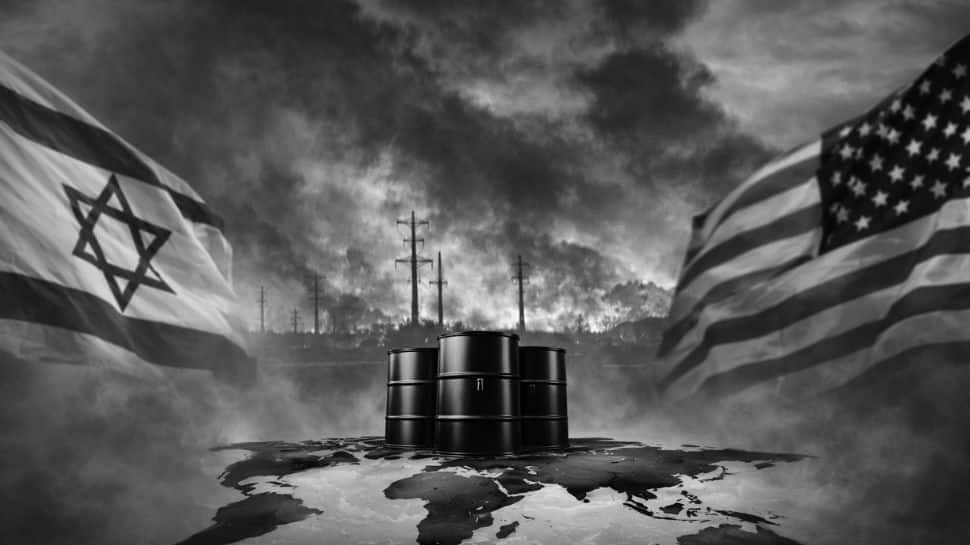
Twenty days into the widening Iran-Israel-US conflict, the global energy market is reeling. As oil prices soar past $108 per barrel, visible rifts between Washington and Jerusalem over “red lines” regarding energy infrastructure have sparked intense speculation: will this shared economic pain force a ceasefire, or a total collapse?
The ‘Alone Act’ vs. The US Red Line
The strategic discord centers on Israel’s strike on South Pars, the world’s largest natural gas field. While Prime Minister Benjamin Netanyahu insisted Jerusalem “acted alone,” the hit triggered a massive Iranian retaliation on Qatar’s energy complexes and other Gulf targets.
US President Donald Trump has drawn a firm line against targeting oil infrastructure. On March 19, Trump claimed he told Netanyahu to refrain from such strikes. “I told him, don’t do that,” Trump stated. Yet, in a typical display of strategic ambiguity, he later added, “We’re independent… it’s coordinated, but on occasion, he’ll do something. If I don’t like it, we’re not doing that anymore.”
The Qatar factor: A 17% blow to global gas
The consequences of the “energy for energy” doctrine are now a reality. Following Iran’s strike on Ras Laffan, QatarEnergy reported a staggering 17% loss in export capacity.
Qatar’s PM Mohammed bin Abdurrahman Al-Thani condemned the move as a “very dangerous escalation” with “significant repercussions for global supplies”—a direct threat to nations like India, which relies heavily on Qatari LNG.
Strait of Hormuz: The $100 billion chokepoint
The conflict has moved from land to the “de facto closure” of the Strait of Hormuz. With 20% of the world’s daily oil supply (20 million barrels) at risk, the US is reportedly urging allies—including China, France, Japan, and the UK—to deploy warships immediately to break the blockade.
Ceasefire catalyst or prelude to recession?
The “shared pain” of the energy crisis presents two possible paths:
Forced mediation: Crippling Iran’s economy may expose regime fragility, pressuring Tehran to the table. Simultaneously, Gulf blowback and the fear of a global recession are nudging Washington toward urgent mediation.
Uncontrolled escalation: Iran’s FM Abbas Araghchi has vowed “zero restraint” against further infrastructure strikes. Analysts fear that if recovery becomes impossible due to permanent damage to sites like Ras Laffan or South Pars, the incentive for a ceasefire vanishes.
Global condemnation
The recent condemnation from Canada, France, Germany, Italy, the Netherlands, Japan, and the UK has fiercely condemned Iran’s assaults on civilian infrastructure and commercial shipping. This mounting global urgency suggests that the “energy card” might be the only one left to play to halt the spiral before a worldwide “blackout” becomes inevitable.


