
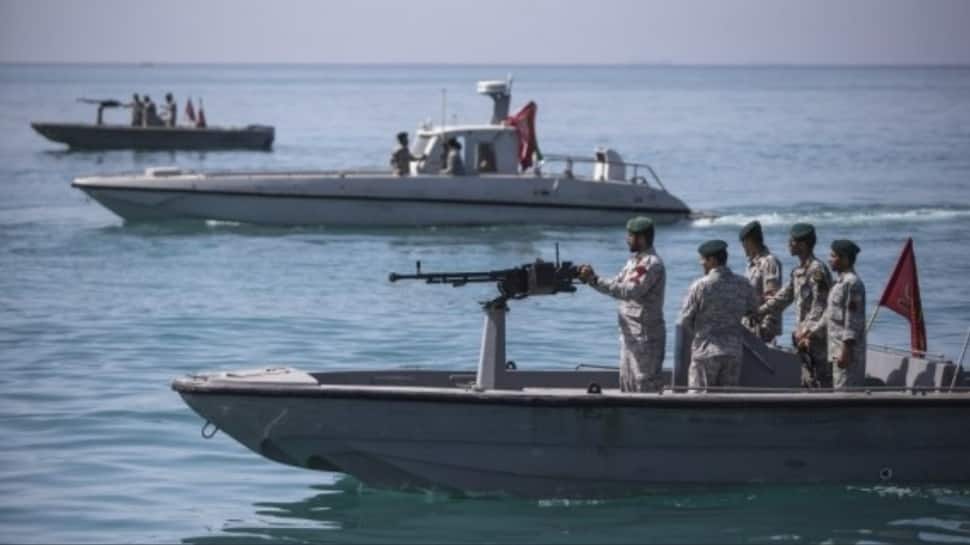
With military tensions on the rise between Iran and the United States, the Strait of Hormuz—the most economically important oil chokepoint in the world—is both an area ripe for conflict and an area where significant legal and military questions exist. With Iran now restricting traffic through its 21-nautical-mile-wide section of the Strait of Hormuz, many of the relevant questions regarding international maritime law are moving from theory (universities) to practical applications (carrier strike groups).
International waters vs. armed conflict
International maritime law allows for free passage through international straits, such as the Strait of Hormuz, under a principle called “transit passage” (United Nations Convention on the Law of the Sea (UNCLOS)). In a time of peace, vessels from all nations have the right to move through the strait without interference from the coastal states (i.e. Iran and Oman), as long as the vessels move continuously and expeditiously.
The current state of hostilities has now placed the relevant legal standards to resolve these issues under a different set of standards: (1) the Law of Armed Conflict (LOAC). Under the LOAC, the relevant provisions of the 1994 San Remo Manual apply to all parties; therefore, if Iran, Israel, and the United States are now classified as “belligerents,” as per Article 2 of the Manual, the relevant legal standards will differ from their classifications as “peaceful” states.
The rules governing a nation’s ability to close a strait depend upon which nation’s territorial or international waters are at issue under the terms of international law regarding naval warfare:
‘Neutral waters‘: Straits that are in the jurisdiction of a neutral country (e.g., Oman) have to remain open for all vessels.
‘Belligerent waters‘: International law does not specifically state that a belligerent nation (Iran) is required to keep its territorial waters open to enemy shipping while there is active conflict between them.
While Iran insists that they can prevent “hostile” ships from passing, attacking neutral commercial shipping is still a breach of international law.
‘The convoy dilemma’: Is your vessel protected, or is it a target?
Historically, the United States has implemented a naval convoy system as an anti-attack deterrent, but this strategy has legal “Catch-22” implications for the merchant vessel involved.
‘Military objective’ risk (primary): If a neutral commercial vessel (ie. a Japanese or Indian oil tanker) participates in a convoy that is being escorted by a US warship, the neutral merchant vessel will lose its neutral status pursuant to Article 30 of the San Remo Manual and can therefore be designated as a military objective, making it a lawful target for Iranian strikes.
‘Neutral Convoy’ (secondary): A neutral warship escorting a neutral merchant vessel maintains its legal protections according to the San Remo Manual, but the Iranian military continues to reserve its right to “visit and search” these vessels to ensure they are not transporting contraband to their enemies.
The ‘neutrality’ trap for allies (secondary): A country’s status in the global arena, such as Australia’s, is currently under scrutiny.
For example, if a country provides military assistance to the United Arab Emirates or Israel, Iran could argue that it cannot remain neutral.
If a country is considered a “party to the conflict,” its private tankers and naval vessels will be considered appropriate targets for lawful attack under international laws of naval warfare.
The financial consequences: Despite the existence of international law, the protection of shipping has become increasingly fragile because of the possibility of “operational mistakes” or misidentification; thus, most international shipping firms have determined it is not safe to use the Gulf of Oman. As a result, oil prices have increased as the “Big Seven” refiners continue to experience ongoing service disruptions.


