
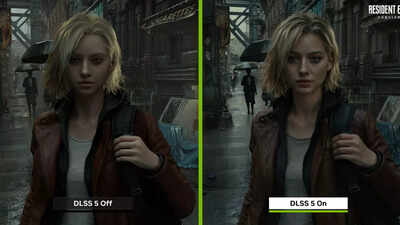
Huang stated that these criticisms are unfounded. He explained that DLSS 5 combines control over game geometry and textures with generative AI, allowing developers to maintain artistic direction while incorporating AI enhancements. Unlike conventional post-processing techniques, DLSS 5 operates at the geometry level, providing generative control of in-game assets rather than altering completed frames.
Nvidia unveils DLSS 5 AI-powered graphics technology: Jensen Huang highlights developer control
Huang emphasised that DLSS 5 offers developers direct control over the AI enhancements, saying, “All of that is in the control — direct control — of the game developer”. Developers can adjust parameters to ensure the AI output aligns with the game’s desired style, whether that involves realistic shading, stylised graphics, or other visual effects. This control is described as “content-control generative AI” and is distinct from typical generative AI applications that produce autonomous content.
Developers are able to implement various artistic approaches using DLSS 5. Examples mentioned by Huang include toon shaders or glass-like effects. The AI system is intended to augment developer workflows rather than replace them, providing an additional tool to manage visual fidelity while optimising performance.
Understanding DLSS 5: NVIDIA’s AI-powered graphics technology
DLSS, or Deep Learning Super Sampling, is NVIDIA’s technology for improving frame rates and image quality using AI. Previous iterations of DLSS focused on upscaling images and improving performance without compromising game visuals. DLSS 5 introduces a generative AI component, which enhances the fidelity of textures, geometry, and lighting, while remaining under developer control. According to Huang, this approach allows developers to fine-tune the AI output to match the artistic style of the game. It operates alongside existing geometry and texture data, adding generative enhancements rather than altering the original artistic intent.
DLSS 5 release timeline and developer support
The founder and CEO of NVIDIA, Jensen Huang, said, “Twenty-five years after Nvidiainvented the programmable shader, we are reinventing computer graphics once again.” DLSS 5 is scheduled for broader launch in the fall.
Nvidiahas indicated that additional demonstrations and developer tools will become available, allowing studios to evaluate the technology and integrate it into games according to their specifications, as per the official release.
Early feedback from developers and technical demonstrations will guide adjustments and refinements before the public release.


