
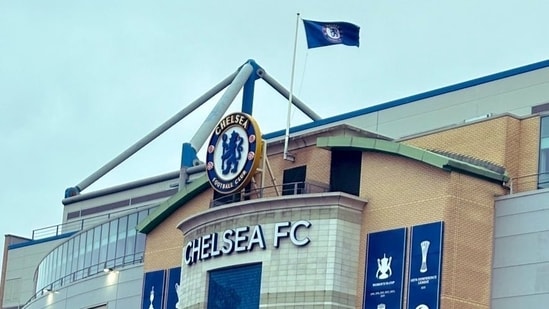
Chelsea have been sanctioned by the Premier League after the club’s current ownership voluntarily disclosed potential historical rule breaches dating back to the Roman Abramovich era. The league’s investigation found that between 2011 and 2018, undisclosed payments linked to the club were made to players, unregistered agents and other third parties, and that those payments should have been treated as club payments in Chelsea’s financial submissions. Chelsea also accepted that the concealment and failure to disclose those payments amounted, among other things, to a breach of its duty to act in good faith toward the league.
The Premier League imposed total fines of £10.75 million, comprising a £10 million sanction for historical financial reporting and third-party investment breaches, plus a further £750,000 fine in a separate youth development case. Chelsea have also been handed an immediate nine-month academy transfer ban and a one-year first-team transfer ban, suspended for two years.
Why Chelsea got off relatively lightly
The biggest reason Chelsea escaped a harsher sporting punishment was the conduct of the club’s current owners. BlueCo self-reported the issue after taking control and discovering the irregularities in historical accounts. The Premier League explicitly treated Chelsea’s proactive disclosure, admissions of breach and exceptional cooperation as major mitigating factors. That cooperation reportedly included the disclosure of around 200,000 documents.
The second and even more decisive factor was financial. Once the hidden payments were added back into Chelsea’s historical submissions, the Premier League concluded that the club still would not, in any scenario, have breached its Profitability and Sustainability Rules. That distinction is crucial. The hidden payments were serious enough to warrant punishment for concealment and reporting failures, but not severe enough to push Chelsea beyond the league’s maximum allowable loss threshold.
That is why Chelsea avoided the sort of sporting punishment that usually changes the whole shape of a case. Had the corrected accounts resulted in a PSR breach, a points deduction would have become a realistic possibility. Instead, the league stopped short of that because the underlying financial position, even after adjustment, still remained within the permitted limits.
The suspended first-team transfer ban says plenty about how close Chelsea came to something far worse. The Premier League made clear that, without the self-reporting and cooperation, a ban covering two complete and consecutive transfer windows would have been considered appropriate. Instead, Chelsea received a one-year ban that has been suspended for two years.
Wolves fightback frustrates Brentford
What it means for the club
For Chelsea as a club, this is still a serious punishment even without a points deduction. Financially, the fine is significant. Reputationally, the damage is greater. This is now one of the most prominent examples of historical financial concealment to emerge in the Premier League era, and it leaves a lasting mark on the Abramovich period, even though the current ownership uncovered and reported the issue themselves.
Operationally, the academy sanction is the most immediate restriction. Chelsea are banned for nine months from registering academy players who had been registered with another Premier League or EFL club in the previous 18 months. That affects the club’s domestic youth recruitment pipeline and limits its ability to strengthen its academy in the usual way over the coming months.
At the first-team level, Chelsea can still operate normally for now, as the transfer ban is suspended. But the suspension also acts as a warning. The club is now operating under a two-year compliance shadow. Any further serious breach could trigger that punishment and turn a suspended sanction into a real one.
There is also unfinished business. A separate FA disciplinary process linked to similar conduct is ongoing, so Chelsea are not yet fully clear. The Premier League case may be settled, but the broader fallout has not necessarily ended.
What it means for the players
For Chelsea’s current first-team players, the direct impact is limited. Their registrations remain intact, they are available to play, and the club is not under an active senior transfer embargo. This is not a case where current players suddenly become ineligible or the squad is immediately frozen.
For the players linked to the historical deals, the consequence is minimal. The Premier League’s punishment is aimed at Chelsea as a club and at its failures in disclosure, governance and regulatory compliance. There has been no announced player-specific sporting sanction as part of this settlement.
The group affected most directly at the player level is the academy market. Young domestic players who might otherwise have moved from another English club into Chelsea’s academy system are the ones who will feel the immediate consequences of the ban. For everyone else, the impact is more indirect – a reminder that the club must now operate with greater caution and tighter compliance.
In the end, Chelsea got off lighter than many expected because the current ownership exposed the wrongdoing themselves and because, once the hidden payments were accounted for, the club still did not cross the threshold that usually triggers the harshest punishments.


