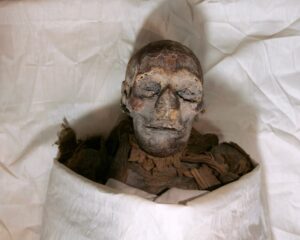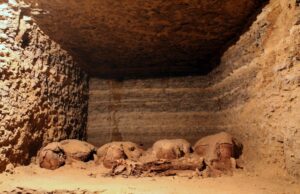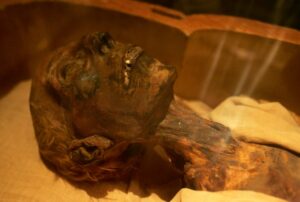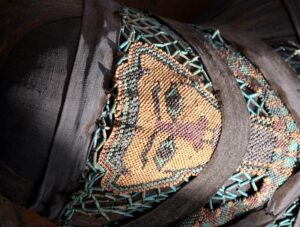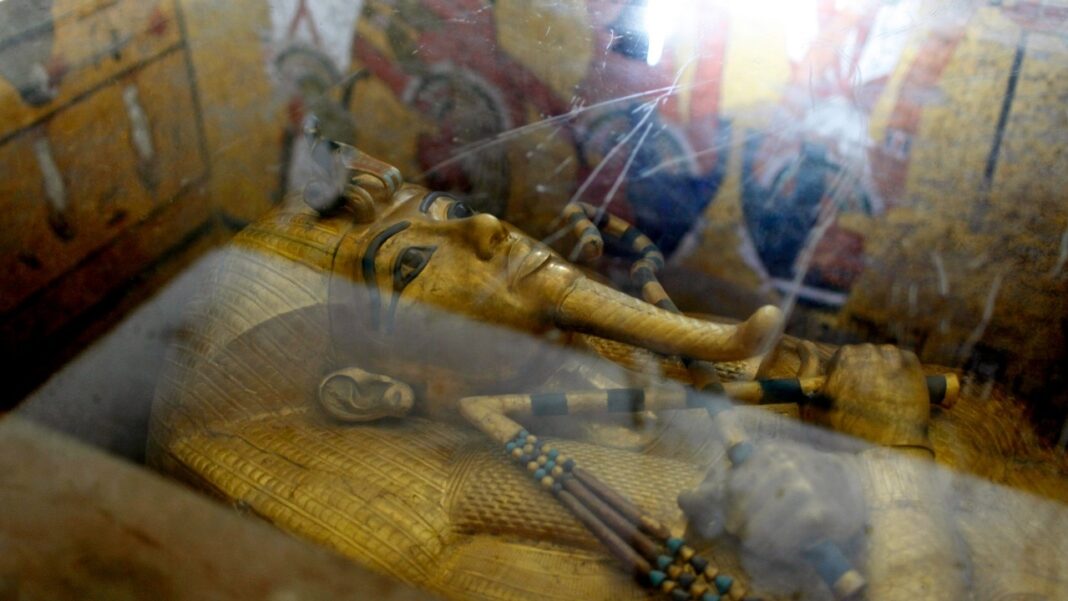
They have been dead for over two thousand years, yet Egyptian mummies still have something left to say and scientists are now listening through their smell.
A new study led by chemists at the University of Bristol has found that the distinctive scent of mummified remains is not simply the result of age or decay. Instead, it reflects a complex mixture of substances used during embalming, along with preserved fabrics and wrappings.
In other words, there are chemical traces in the musty scents of the ancient remains that reveal how mummification methods changed and grew more sophisticated over centuries.

Mummification is the process of preserving a dead body by removing moisture and internal organs to prevent decomposition. It was practised most famously by ancient Egyptians, who believed preserving the body was essential for the deceased’s journey into the afterlife.
The research detailing how the process evolved over different periods in history was published in the Journal of Archaeological Science.
WHAT DO MUMMIES SMELL LIKE AND WHAT DOES IT MEAN?
To investigate the source of mummy scents, researchers examined the air surrounding tiny mummy fragments, about the size of a peppercorn. This approach is gentler than traditional techniques, which often require soaking samples in chemicals and can permanently damage fragile artefacts.
Using specialised tools to capture and analyse the gases released by the samples, the team identified the different scent molecules drifting off the remains and studied each one individually.

In total, the study analysed 35 samples of balms and bandages from 19 mummies spanning more than 2,000 years of Egyptian history, between 3200 BC and 395 AD.
Across all samples, scientists identified 81 distinct scent compounds. These were grouped into four categories linked to specific embalming ingredients: fats and oils, beeswax, plant resins, and bitumen, which is a dark, tar-like natural substance. Each of these substances left behind its own chemical fingerprint.
“The findings mark a significant step forward in improving our understanding of Egyptian history and the fascinating ritual of mummification. Our analysis of the associated scents has uncovered new insights into how the practice developed through the ages and became increasingly sophisticated,” said lead author Dr Wanyue Zhao, a research associate in Organic Geochemistry at the University of Bristol.

WHAT DID THE MUMMIES REVEAL?
Dr Zhao said that the mix of ingredients used in mummifying the remains varied across historical periods.
Earlier mummies were treated with simpler combinations dominated by fats and oils, while later mummies showed more elaborate recipes incorporating imported resins and bitumen, both costlier materials that required more specialised preparation.
The variation also did not stop at time periods. The chemical signatures also differed depending on which part of the body was sampled.
Heads, for instance, were often treated differently from arms and legs, suggesting that embalmers applied distinct recipes to different body parts, possibly to improve preservation in specific areas.

The technique used to study the scents and identify chemical composition also carries benefits for museums and research institutions.
Study co-author Ian Bull, a professor at the University of Bristol, said: “Physical sampling still plays a role for detailed work, yet volatile analysis provides an effective and enlightening first step for studying embalmed remains across collections and time periods.”
By sniffing the air around a mummy rather than cutting into it, researchers can study ancient remains without causing any damage. This could provide a significant advantage when working with irreplaceable artefacts from one of the world’s greatest ancient civilisations.