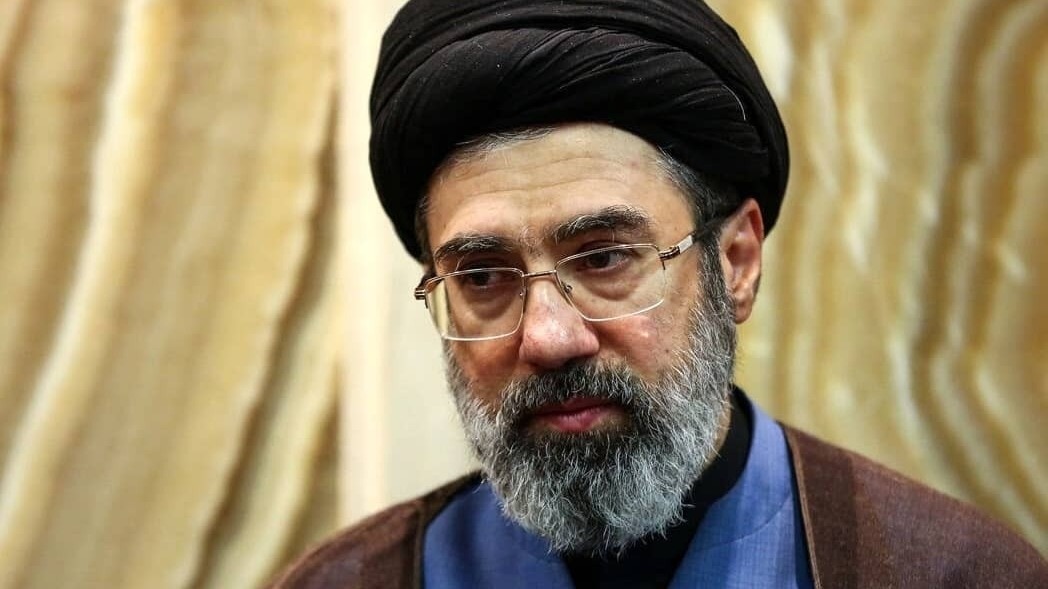
For years, his name moved in whispers in Iran.
Inside the corridors of power in Tehran, few figures were spoken about as cautiously as Mojtaba Khamenei. He did not hold high public office. He rarely addressed crowds. Yet, within Iran’s political system, his influence was widely discussed.
That shadowy presence has now shifted into full view.
After the death of his father Ali Khamenei in February 2026 in the Iran-US-Israel war, Mojtaba Khamenei was elevated as Supreme Leader. The transition was swift, but the story behind it stretches back decades.
ROOTS IN A REVOLUTIONARY WORLD
To understand his rise, you have to return to the years after the 1979 revolution. Iran was not just rebuilding a state. It was building a system meant to defend an idea.
During the Iran–Iraq War, thousands of young men joined volunteer forces known as the Basij. They were not a regular army in the traditional sense. They were driven by ideology, loyalty and a sense of religious duty.
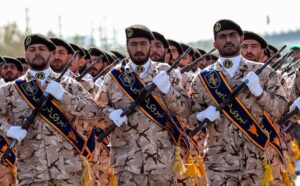
Mojtaba Khamenei is believed to have had links to this world in his younger years. That connection matters. The Basij later became part of a wider network tied to the Islamic Revolutionary Guard Corps (IRGC), the powerful institution created to protect the Islamic Republic from both internal and external threats.
In Iran, these networks are not just military. They are political. They shape careers, loyalties and influence.
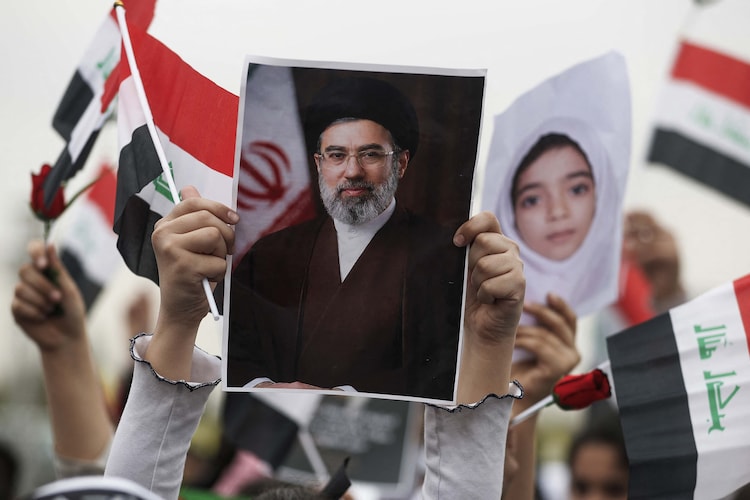
POWER WITHOUT SPOTLIGHT
Unlike elected leaders such as presidents, Mojtaba Khamenei built his position largely behind the scenes. Over time, he was seen as a figure with close ties to the IRGC and sections of the clerical establishment.
Observers often described him as someone who understood how power flows in Iran. Not through speeches alone, but through institutions, relationships and control over key levers of the system.
His name surfaced repeatedly during moments of political tension, especially around elections and internal debates. Yet, he remained officially in the background.
That distance from public office made his rise all the more striking.
THE BASIJ CONNECTION AND WHY IT MATTERS
The Basij is often described as a volunteer force, but its role runs deeper. It operates as a social, political and security network, with presence across towns, universities and workplaces.
Iran doesn’t just have two armies. It has a layered system: a regular army (Artesh) for defence, the IRGC for regime protection which is a parallel military with ideological role, and the Basij is the mass civilian volunteer wing of the IRGC.
The Basij was created in 1979 by Ruhollah Khomeini right after the revolution. But unlike the army or IRGC soldiers, Basij members are not full-time professional troops. They are civilians, often young men, students, or workers, who are lightly trained but easily mobilised.
During the Iran–Iraq War, they were sent to the front lines in large numbers. Today, their role has shifted more inside the country.
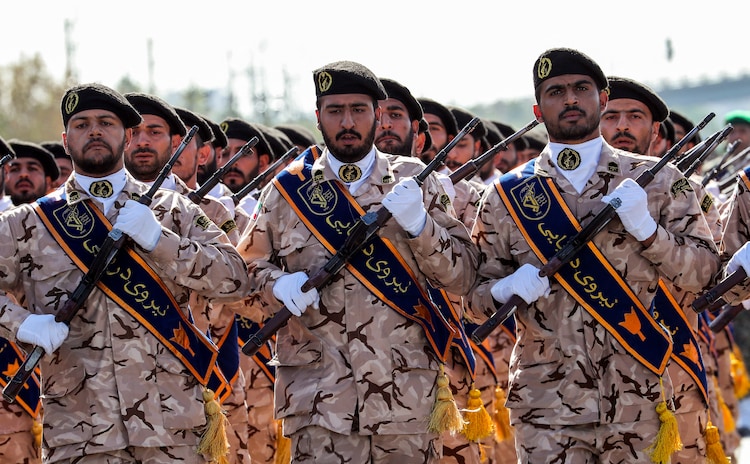
So while the Iranian army (Artesh) defends borders, the IRGC handles strategic defence, missiles, and foreign operations, the Basij focuses largely on internal control. They are basically the state’s eyes and feet on the ground via a grassroots network of loyalists who can control the streets, neighbourhoods, and everyday life.
Mojtaba Khamenei’s early association with this ecosystem is key to understanding his trajectory. It places him within a structure where loyalty to the system often carries as much importance as formal rank.
A MOMENT FILLED WITH QUESTIONS
Today, as he steps into the role of Supreme Leader, many details remain uncertain. Reports about his current condition have been conflicting, adding another layer of intrigue to an already complex transition.
What is clear is the path that led here.
From the world of Basij fighters shaped by war and ideology to the highest office in the country, Mojtaba Khamenei’s journey mirrors the system that produced him.
A system where power does not always announce itself loudly, but builds over time, quietly, until the moment it can no longer be ignored.
In Iran, that moment has arrived.