
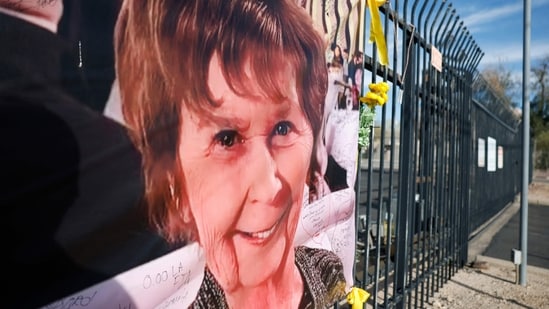
Nancy Guthrie, the mother of ‘Today’ show host Savannah Guthrie, has been missing since January 31. While authorities believe that the 84-year-old was kidnapped from her Tucson home, no suspects have been identified yet. Now, forensic experts are pointing to potential investigative avenues that could help authorities identify the person responsible.
Investigator points out at key evidence
During an interview with NewsNation journalist Brian Entin, forensic science professor April Stonehouse outlined the types of evidence she believes investigators should closely examine as the search continues.
One piece of evidence that particularly stood out to Stonehouse was a flashlight seen in surveillance footage from the night Guthrie vanished. Doorbell camera footage showed a masked individual approaching Guthrie’s home while carrying a flashlight and wearing gloves and a jacket. At one point, the suspect placed the flashlight in his mouth while attempting to block the camera using nearby foliage.
Stonehouse said that detail immediately caught her attention.
“I would have cued into that immediately and said, ‘that is a great source of DNA.’ I would’ve asked, ‘did they recover that flashlight?’” she said.
Because the suspect held the flashlight in his mouth, Stonehouse explained it could contain saliva that might allow investigators to build a DNA profile. She added that if she were working the case, locating the flashlight would be a top priority.
Questions about blood evidence
Stonehouse also raised questions about the blood evidence discovered at the scene. Early in the investigation, authorities confirmed that blood found on Guthrie’s front porch belonged to the missing grandmother.
However, the forensic scientist said she would want to determine whether additional blood was present inside the house.
When Entin asked whether anything in particular “piqued [her] interest,” Stonehouse said she would start by asking investigators key questions, including “is there blood on the inside of the home?”
She noted that testing additional samples could help identify whether anyone else was injured during the incident.
“We know that the blood at the front door is [Guthrie’s], but if there is other blood inside the home, I would definitely want to test that,” Stonehouse said.
Stonehouse explained that investigators often analyze multiple blood stains in cases where more than one person may have been injured.
“Sometimes, in cases, you have multiple people who are bleeding and you select multiple blood stains to run in an effort to try and find the profile from different individuals,” she explained.
However, she acknowledged that testing decisions can be complicated because several stains may belong to the same person.
“It can be difficult at times to decide which blood stains to test because they may all be from the same person,” she said.
Blood pattern analysis
In addition to DNA testing, Stonehouse noted that investigators typically analyze blood stain patterns to determine which samples might be most useful.
Blood spatter patterns can provide clues about how an incident unfolded and help forensic teams decide which stains should undergo DNA testing.
“I can think of multiple cases where we look at clothing, we would select blood stains from different parts of a shirt, for example,” she said.
Nancy Guthrie update
Authorities believe she was abducted after evidence suggested a violent encounter outside her home. Investigators have continued to search for leads as the case remains unsolved.
Forensic specialists say DNA evidence, if recovered from key items such as the suspect’s flashlight or additional blood samples, could prove critical in identifying the person responsible.


