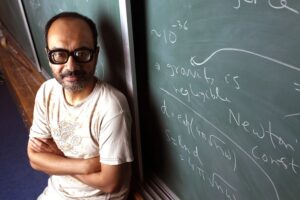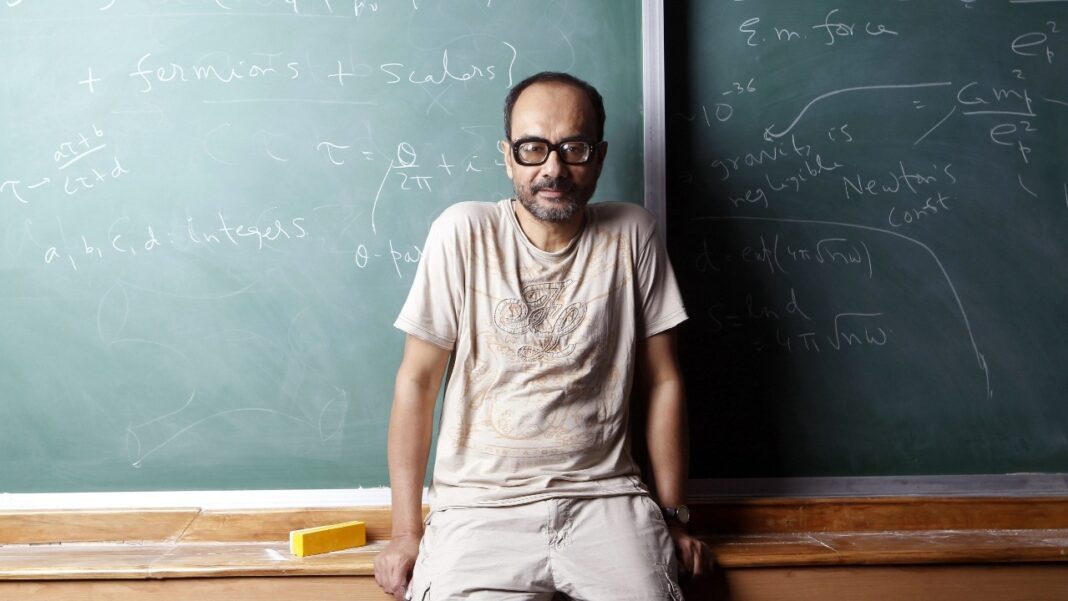
“When I was growing up, there were local heroes like Satyendra Nath Bose and Meghnad Saha who everyone in Kolkata knew,” Professor Ashoke Sen recalls.
Today, the 69-year-old is one of India’s most respected theoretical physicists. His work helped reshape modern string theory, revealing that what once appeared to be five separate theories might actually be different descriptions of a single underlying idea.
For that contribution, he was awarded the Breakthrough Prize in Fundamental Physics in 2012, a prize worth about $3 million, nearly three times the cash value of a Nobel Prize.
But the journey that led to one of the biggest prizes in science began in Kolkata back in the 1970s, when the city’s intellectual life was buzzing with the legacy of some of India’s, and the world’s, greatest scientists.
It was a time when names like Satyendra Nath Bose, who worked with Albert Einstein and after whom the particle ‘Boson’ is named, and Meghnad Saha, who developed the famous Saha ionisation equation in astrophysics, were not distant figures from textbooks.
They were widely known in the city, shaping the imagination of young students who were beginning to fall in love with physics.
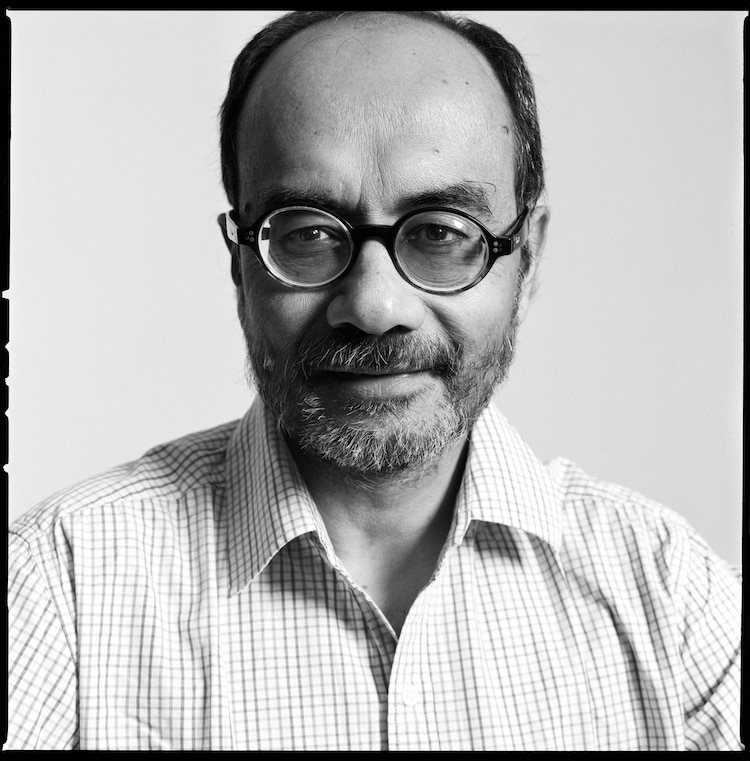
“For me this was gradual,” Sen says of how his own interest in the subject began. “In school I was interested in Mathematics. My father was teaching Physics in a college.”
The environment mattered. Physics was one of the most popular subjects among students at the time. “Just to give an example, five of the top ten rank holders (I was not one of them) in the board exam were my classmates in the college,” he recalls in an exclusive interview with India Today.
And sometimes, the giants of science appeared closer than expected.
“In the college I had Amal Kumar Raychaudhuri as a teacher,” Sen says. “He was excellent in teaching but later I came to know that he was one of the leading scientists in the world.”
Little did Sen know then that he would one day become one too.
Slowly, through his BSc and MSc years, curiosity deepened into a lasting fascination, one that would eventually lead him into theoretical physics.
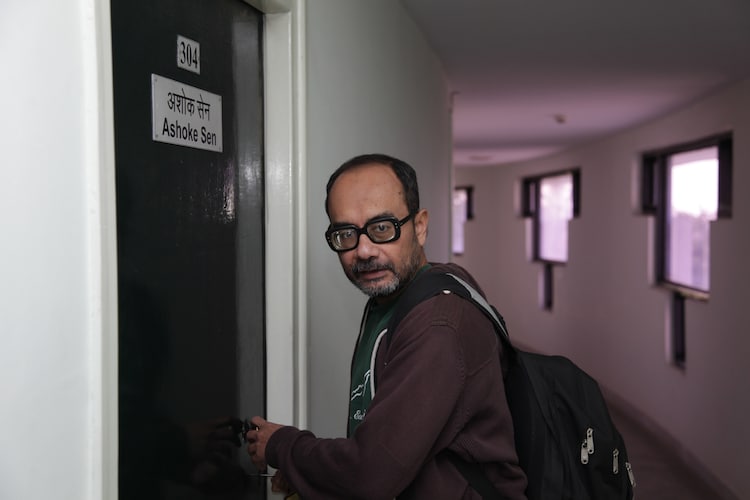
UNDERSTANDING THE UNIVERSE THROUGH STRINGS
String theory is often considered one of the most complex ideas in physics. But when Professor Sen explains it, the concept sounds surprisingly simple.
“In the usual approach to understanding nature, the basic constituents of matter are taken to be particles, that is point-like objects,” he says.
“The main idea in string theory is that the elementary constituents are string-like objects but their size is so small that they appear to us like particles,” he adds.
According to Professor Sen, the same tiny string vibrating in different ways can appear as different particles.
But what excites physicists most about the theory, he says, is something even bigger — “String theory automatically produces a quantum theory of gravity.”
However, he is careful not to oversimplify the challenge. “The main problem with string theory is that even though the laws are fixed, the theory has many solutions,” he says.
Scientists are still searching for a solution that exactly matches the particles we observe in nature.
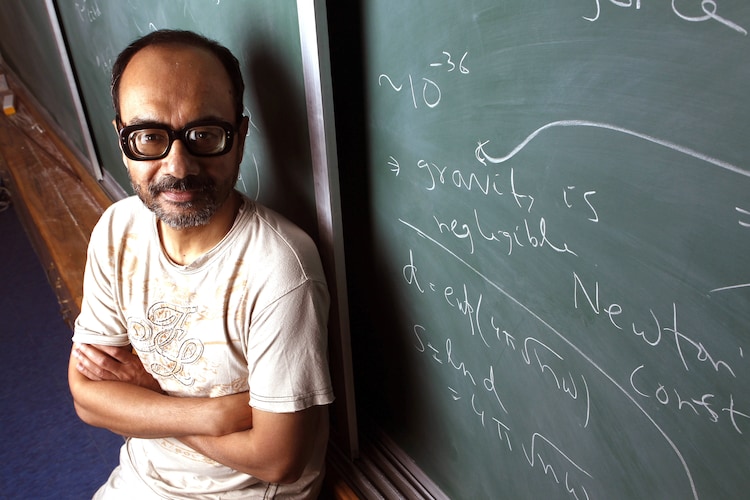
THE DISCOVERY THAT CHANGED STRING THEORY
Professor Sen’s research played an important role in what physicists later called the “second superstring revolution”.
“My work was on strong weak coupling duality in string theory,” he explains. In simple terms, this means that two theories that look very different might actually describe the same reality.
“I demonstrated this in a very special context,” he says.
Later, other scientists expanded this idea further. Eventually, physicists realised that five different string theories that were once believed to be separate were actually different ways of describing the same theory.
“That is why now there is a single string theory,” he says.
WHY HE CHOSE TO BUILD HIS CAREER IN INDIA
After completing his post-doctoral research in the United States, Professor Sen returned to India early in his career. His explanation for the decision is surprisingly straightforward.
“I never thought of staying abroad, so no motivation needed,” he says. “The only deciding factor was that I got a job in India,” he adds.
Earlier in his career, he spent many years at the Harish-Chandra Research Institute (HRI) in Prayagraj, one of India’s leading centres for theoretical physics, where much of his influential work in string theory was developed.
Over the years, he has worked at some of the country’s leading research institutions and has helped strengthen India’s presence in theoretical physics.
“In the area of string theory, India certainly has contributed a lot and is considered as one of the leading countries,” he says.

A SIMPLE LIFE, EVEN AFTER GLOBAL RECOGNITION
Despite winning one of the biggest prizes in science, the Breakthrough Prize, Professor Sen says his lifestyle has never changed.
“I have always lived in a way that I find most comfortable,” he says. “So there was no need or urge to change it,” he adds.
For many years after returning to India, he simply lived close to his workplace and walked to work.
“Most of my life I have stayed close to my working place and so I walked to work,” he says. In recent years, while living further away during his time in Bengaluru, he has taken taxis to commute.
Recognition, he says, never changed the way he approaches science.
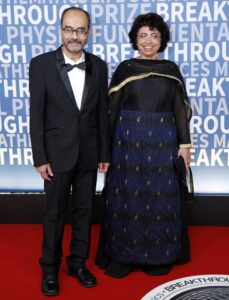
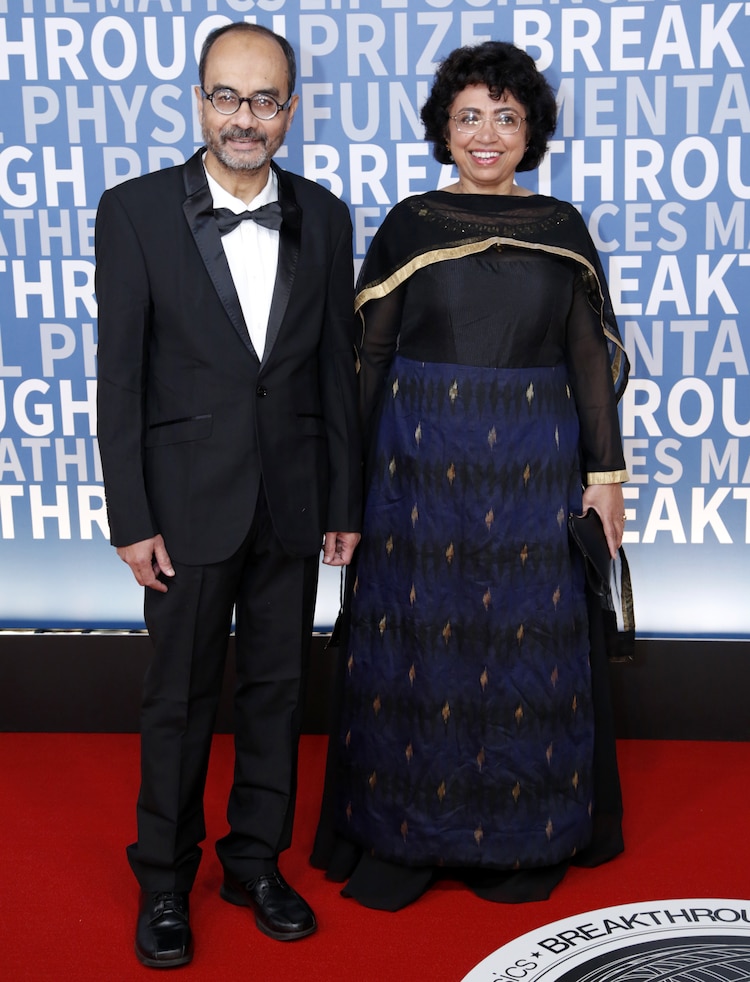
His wife, Sumathi Rao, is also a well-known theoretical physicist who works in condensed matter physics, studying electronic transport in quantum systems such as quantum wires and quantum dots.
The couple have spent much of their careers working in India’s leading research institutes and are often seen as one of the country’s notable scientific partnerships in theoretical physics.
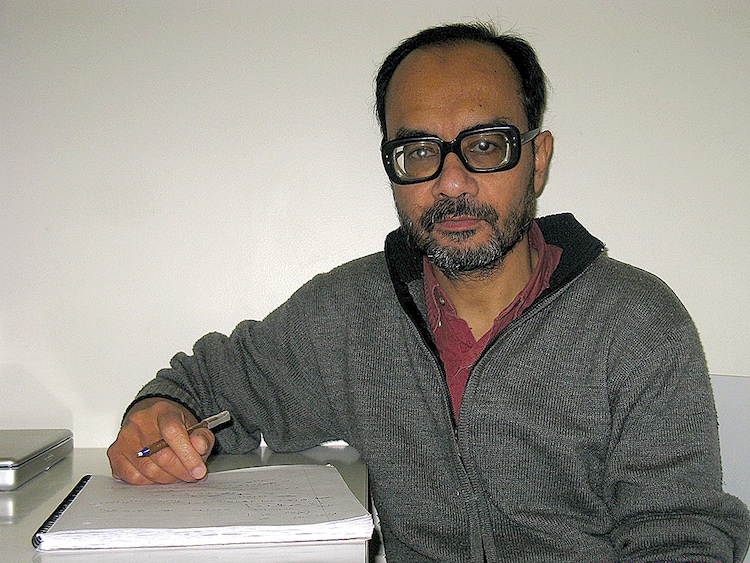
THE RISKS OF DOING BIG SCIENCE
Theoretical physics often deals with ideas that may take decades to test. Yet that uncertainty never discouraged him.
“Since the aim of research is to generate new knowledge, it is always a risky affair,” he says. “In subjects like string theory it is even more risky since string theory may not be verified in our lifetime,” he adds.
Still, he believes someone has to take that chance.
“If everyone uses this logic, then there will be no progress,” Professor Sen said. “Some people have to take long term risks even if this means wasting your whole life following a wrong track,” he notes.
Today, Ashoke Sen continues to work on string theory as a distinguished professor at the International Centre for Theoretical Sciences (ICTS) in Bengaluru, where he studies questions related to quantum gravity, black holes and superstring theory. His wife, physicist Sumathi Rao, is also a professor at the institute.
HIS MESSAGE TO YOUNG PHYSICISTS
When asked about the challenges young physicists in India face today, Professor Sen pointed to one major concern, jobs.
“Getting a job seems to be the biggest struggle,” he says.
He explains that many students now complete PhDs, but theoretical physicists usually spend several years in post-doctoral research before getting permanent positions.
“The number of post-doctoral positions in India seems to be very limited and is reducing with time,” he says, adding that many young researchers now go to countries like China for these opportunities.
AN ORDINARY DAY IN AN EXTRAORDINARY LIFE
Despite working on questions about the universe, Professor Sen’s daily routine is surprisingly ordinary.
When he is not working, he spends his time doing simple things.
“Cooking, eating, washing dishes, chatting with friends, sleeping etc.,” he says. “Not very different from anyone else,” he adds.
And perhaps that is what makes the story of Ashoke Sen special, a man asking some of the biggest questions about the universe while living a life that remains wonderfully simple.