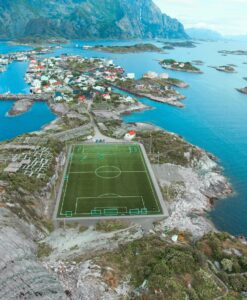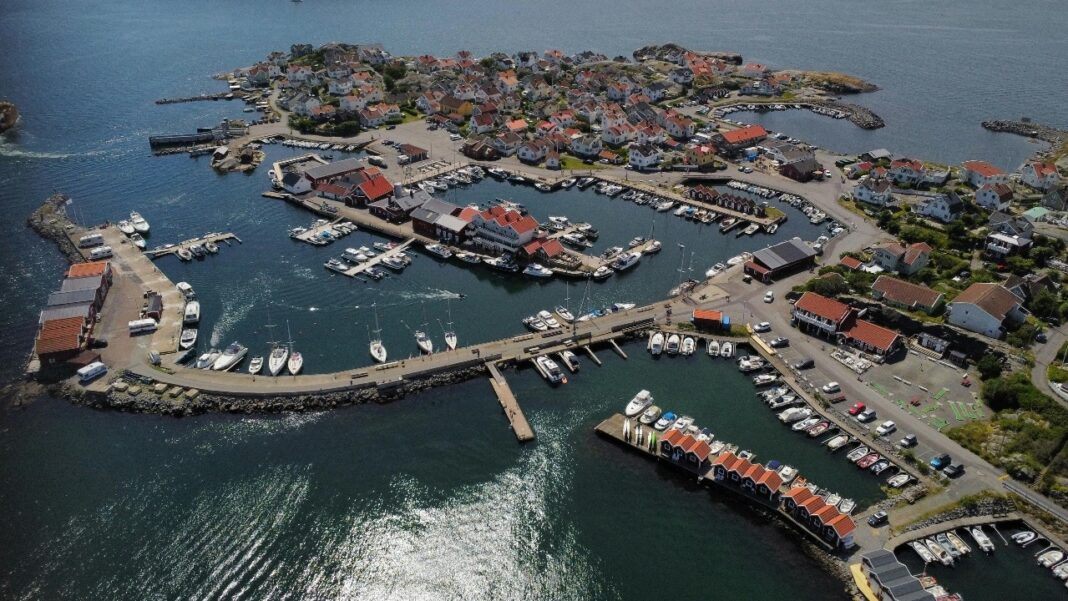
The planet’s geography is dotted with an extraordinary number of islands, from tiny rocky outcrops rising just above sea level to large landmasses that support cities, forests and thriving communities.
These islands are formed through different natural processes such as volcanic activity, glacial movement and rising sea levels.
While several countries are known for their island chains and archipelagos, one nation stands far ahead of the rest in terms of sheer numbers. So, which country actually has the most islands in the world?
WHICH COUNTRY HAS THE HIGHEST NUMBER OF ISLANDS?
Sweden holds the record for having the largest number of islands in the world. According to data from the National Geographic database maintained by Statistics Sweden, the country has around 267,570 islands within its territory.
These islands are spread across Sweden’s extensive coastline along the Baltic Sea as well as its many inland lakes. Despite the huge number, only a small fraction are inhabited. Fewer than 1,000 islands have permanent residents, while the rest remain largely untouched natural landscapes.
WHY DOES SWEDEN HAVE SO MANY ISLANDS?
The unusually large number of islands in Sweden is closely linked to the country’s geological history. During the last Ice Age, thick glaciers covered much of Northern Europe. As these glaciers gradually melted and retreated, they carved deep valleys and reshaped the coastline.
This glacial activity left behind thousands of rocky formations and small land fragments. Over time, many of these formations became islands scattered along Sweden’s coast and lakes, particularly in the Baltic region.
ARE ALL OF SWEDEN’S ISLANDS LARGE?
Most of Sweden’s islands are actually very small. Many are little more than rocky islets or skerries, barely rising above the water surface. Others are forest-covered and surrounded by freshwater lakes or coastal waters.
One of the best-known island regions in the country is the Stockholm Archipelago, located near the capital city. This archipelago alone contains more than 24,000 islands, islets and skerries, making it one of the largest island groups in the Baltic Sea.

WHERE CAN I FIND A LIST OF THE LARGEST ISLANDS IN SWEDEN?
A list of Sweden’s largest islands can be found through official geographic data published by government agencies such as Statistics Sweden and the Swedish Mapping, Cadastral and Land Registration Authority (Lantmäteriet), which maintain national mapping and land records.
Some of the largest islands in Sweden include:
Gotland – the largest island in the country, located in the Baltic Sea
land – Sweden’s second-largest island, connected to the mainland by a bridge
Sdertrn – a large island area south of Stockholm
Orust – one of the largest islands on Sweden’s west coast
Hisingen – the largest island on the West Coast and part of the city of Gothenburg
These islands are among the few that support significant populations and infrastructure, while thousands of smaller islands across Sweden remain sparsely inhabited or completely uninhabited.
WHICH OTHER COUNTRIES ALSO HAVE MANY ISLANDS?
Although Sweden leads the world in island count, several other countries also have large numbers of islands. These include:
| Country | Approximate Number of Islands |
|---|---|
| Norway | About 239,000 |
| Finland | Around 179,000 |
| Japan | More than 120,000 |
| Canada | Over 52,000 |
Many of these countries, particularly in Northern Europe, have coastlines shaped by glacial activity similar to Sweden’s, which explains their high number of islands.
WHY CAN ISLAND COUNTS DIFFER?
Counting islands may seem simple, but it can actually be complicated. Different countries and geographic authorities may use varying definitions of what qualifies as an island. Some counts include extremely small rocky formations, while others only count larger land areas.
In addition, improvements in satellite mapping and geographic surveys continue to refine the data, meaning the total number of islands in a country can sometimes change as new information becomes available.
WHAT DOES THIS MEAN FOR GLOBAL GEOGRAPHY?
Sweden’s vast number of islands highlights how natural forces such as glaciers and shifting sea levels have shaped the world’s landscapes over thousands of years.
While many people associate island nations with tropical archipelagos, the country with the most islands actually lies in northern Europe, where icy geological history has left behind a remarkable network of islands scattered across seas and lakes.
In short, Sweden ranks first globally with about 267,570 islands, making it the country with the highest number of islands in the world.