
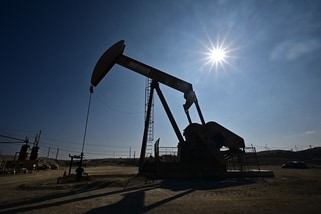
The International Energy Agency (IEA) on Wednesday (local time) announced that it will release 400 million barrels of oil from its emergency stockpile into the market to address disruptions in the global energy markets stemming from the war in the Middle East.
The 32-member organisation said the decision to take this emergency action was made after an extraordinary meeting held recently. The meeting, convened by IEA Executive Director Fatih Birol, was to assess market conditions amid the ongoing conflict in the Middle East and consider the available options to address supply disruption concerns.
Birol said, “The oil market challenges we are facing are unprecedented in scale. I am very glad that IEA member countries have responded with an emergency collective action of unprecedented size.”
He observed that since oil markets are global, the response to major disruptions should also be global. “Energy security is the founding mandate of the IEA, and I am pleased that IEA members are showing strong solidarity in taking decisive action together,” Birol stated.
Watch: Energy Crisis? G7 Considers Emergency Oil Release As Prices Explode Amid Iran War: Report
When will the emergency stock be made available?
According to a release by the IEA, the emergency stock will be made available to the market based on timelines determined by each member country’s circumstances, with some countries implementing additional emergency actions.
Further details on how this “collective action” will be implemented will be shared by the IEA Secretariat. It will also continue to closely monitor global oil and gas markets and to provide recommendations to member governments, as needed.
How much is IEA’s emergency stockpile?
IEA member countries hold an emergency reserve of over 1.2 billion barrels, with an additional 600 million barrels of industry stocks, which are held under government obligation. The emergency stock release is the sixth incident so far in the history of the IEA, which was formed in 1974. Previously, it has released emergency stockpiles in 1991, 2005, 2011, and twice in 2022.
G7 agrees to take “necessary measures”
Earlier on Monday, the BBC reported that the G7 member countries were ready to take “necessary measures” to support global energy supply. The meeting was held after the US and Israel’s war in Iran sent oil prices to nearly $120 a barrel and spooked traders.
US-Israel-Iran war intensifies
The development comes as the United States and Israel’s war in Iran entered its 12th day on Wednesday with no signs of easing off. Tensions have escalated drastically in the region, with many Middle Eastern countries bearing the brunt of the war after Tehran launched retaliatory strikes, targeting Israel and the US bases in the Gulf region. Additionally, Iran’s Islamic Revolutionary Guards Corps (IRGC) announced the closure of the Strait of Hormuz, a key corridor through which nearly one-fifth of the world’s oil is supplied.
About 20 million barrels of crude oil and petroleum products per day moved through the Strait of Hormuz in 2025, accounting for roughly a quarter of global seaborne oil trade. However, there are very few alternative routes available for shipments to bypass the strait.
Amid the ongoing conflict, the export volumes of crude and refined products are less than 10% of pre-conflict levels. This is now forcing operators across the region to either shut in or limit a substantial amount of production, with several companies across continents invoking force majeure. It is a legal term that allows either party to avoid fulfilling their obligations without being penalised, in case of an unexpected event.


